What Services Are Offered by Tree Service Arborists?
What Services Are Offered by Tree Service Arborists? Providing Comprehensive Tree Care and Management
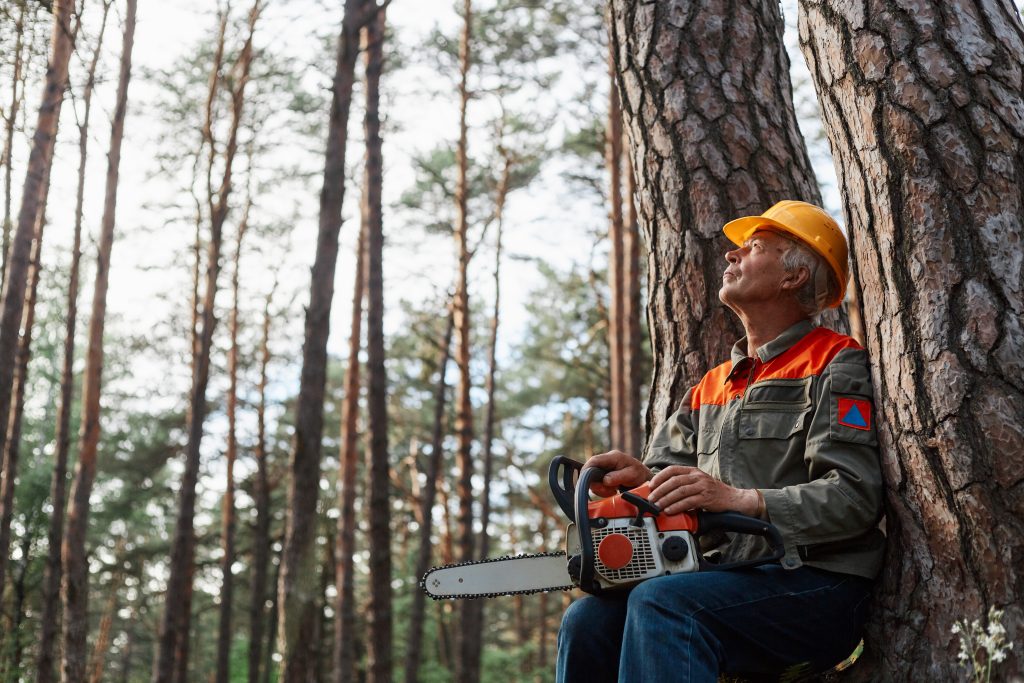
When it comes to the care and management of trees on your property, hiring the expertise of tree service arborists is crucial. Arborists are professionals trained in the art and science of tree care, possessing extensive knowledge and experience in the field of arboriculture. In this article, we will explore the wide range of services offered by tree service arborists, including tree care, removal, planting, surveys, and more. By understanding the services provided by these experts, you can ensure the health, safety, and beauty of the trees on your property.
Tree Care Services
One of the primary services provided by tree service arborists is comprehensive tree care. Arborists assess the health and condition of trees, providing tailored solutions to promote their vitality and longevity. Some common tree care services offered by arborists include:
Pruning and Trimming: Arborists specialize in proper pruning techniques, ensuring the removal of dead or diseased branches, promoting healthy growth, and enhancing the tree’s overall aesthetics.
Disease and Pest Management: Arborists are trained to identify and treat various diseases and pest infestations that can harm trees. They employ environmentally friendly approaches, minimizing the use of pesticides and prioritizing tree health.
Cabling and Bracing: In cases where trees have structural weaknesses or are at risk of limb failure, arborists can install support systems such as cables and braces to ensure the tree’s stability and prevent damage.
Fertilization and Soil Management: Arborists assess soil conditions and recommend appropriate fertilization and soil management techniques to improve the tree’s nutrient uptake and overall health.
Tree Removal and Stump Grinding
Tree service arborists also specialize in tree removal when necessary. They have the expertise, equipment, and experience to safely remove trees that pose a risk to property or are no longer viable. After tree removal, arborists can also provide stump grinding services to remove the remaining tree stump, restoring the area to a usable state.
Tree Planting and Planning
Arborists play a crucial role in tree planting and planning. They have in-depth knowledge of tree species, growth patterns, and environmental requirements, allowing them to recommend suitable trees for your property. Arborists can assist in the selection, placement, and planting of trees, ensuring their long-term health and compatibility with the surrounding landscape. They consider factors such as soil conditions, sunlight exposure, and future growth to create a well-planned and sustainable tree planting project.
Tree Surveys and Reports
Tree service arborists also conduct tree surveys and provide detailed reports. These surveys assess the condition, health, and safety of trees on a property. Arborists identify potential risks, such as diseased or structurally compromised trees, and offer recommendations for their management. Tree reports generated by arborists are valuable resources for property owners, helping them make informed decisions regarding tree care, development projects, or insurance purposes.
Consultation and Expert Advice
Tree service arborists are valuable sources of information and guidance for customers. They offer consultations, where they assess the needs and concerns of property owners, answer questions, and provide expert advice. Arborists can assist with tree-related issues, such as tree selection, maintenance plans, emergency response, and tree preservation during construction projects. Their expertise ensures that customers receive accurate information and quality service tailored to their specific requirements.
Professional Credentials and Qualifications
It’s important to choose certified arborists when seeking tree care services. Certified arborists have undergone extensive training and have demonstrated their knowledge and skills in the field of arboriculture. They are often affiliated with professional organizations such as the International Society of Arboriculture (ISA) and adhere to industry best practices. Additionally, reputable tree service companies invest in the ongoing education and development of their arborists to ensure they stay updated with the latest techniques and advancements in tree care.
Conclusion
Tree service arborists offer a comprehensive range of services to care for and manage trees on residential and commercial properties. From tree care and maintenance to removal, planting, surveys, and consultation, arborists play a vital role in ensuring the health, safety, and beauty of trees. By hiring certified arborists with years of experience and expertise, property owners can rest assured that their trees are in capable hands. Whether you need routine tree care, emergency response, or assistance with tree-related planning and projects, tree service arborists are the professionals to rely on for quality service and the preservation of your natural resources.
Finding the Best Tree Services: Why Truco Services, Inc. is the Ideal Choice
When it comes to tree care, finding the best tree services is crucial to ensure the health and beauty of your trees and property. Truco Services, Inc. is a reputable and professional tree service company that offers a wide range of tree care solutions. In this article, we will explore the key factors to consider when searching for the best tree services and how Truco Services, Inc. stands out as an industry leader.
Certified Arborists and Expertise:
One of the most important factors in finding the best tree services is to ensure that the company employs certified arborists and experienced professionals. Truco Services, Inc. prides itself on having a team of certified arborists who have undergone rigorous training and possess in-depth knowledge of tree care. Their expertise allows them to accurately assess tree health, provide proper pruning techniques, diagnose diseases, and offer effective tree care solutions.
Comprehensive Range of Services:
Truco Services, Inc. offers a comprehensive range of tree services to cater to the diverse needs of their customers. Whether you require tree removal, tree planting, tree trimming, stump grinding, or any other tree-related services, Truco Services, Inc. has the expertise and equipment to handle the job efficiently and safely. Their services are designed to promote the health and growth of your trees while ensuring the safety of your property.
Quality and Professionalism:
When selecting a tree service company, it’s important to choose one that values professionalism and maintains high-quality standards. Truco Services, Inc. is committed to providing top-notch service to their customers. They prioritize professionalism in every aspect of their work, from prompt communication and transparent pricing to efficient project management and attention to detail. Their dedication to quality ensures that your tree care needs are met with the highest level of satisfaction.
Experience and Track Record:
Truco Services, Inc. has years of experience in the tree service industry, making them a reliable choice for your tree care needs. Their long-standing presence in the industry is a testament to their expertise and commitment to customer satisfaction. Additionally, they have a proven track record of successfully completing projects for a wide range of clients, including residential and commercial properties. Their experience enables them to handle various tree-related challenges and provide effective solutions.
Customer Reviews and Testimonials:
A great way to gauge the reputation and reliability of a tree service company is by checking customer reviews and testimonials. Truco Services, Inc. has a strong online presence and positive feedback from satisfied customers. Their commitment to delivering exceptional service and exceeding customer expectations is evident in the feedback provided by their clients. Taking the time to read reviews can give you valuable insights into the quality of their work and customer satisfaction.
Conclusion:
When searching for the best tree services, Truco Services, Inc. stands out as a reputable and reliable choice. With certified arborists, a comprehensive range of services, a commitment to quality and professionalism, years of experience, and positive customer reviews, they have established themselves as a leader in the industry. Whether you require tree removal, tree planting, tree trimming, or any other tree care service, Truco Services, Inc. has the expertise and dedication to meet your needs. Contact them today for a free consultation and experience their exceptional tree services firsthand.
{
"@context":"https://schema.org",
"@type":"WebPage",
"headline":"How To Find The Best Tree Services?",
"url":"https://truetreeservices.com/how-to-find-the-best-tree-services/",
"about":
Tree services refer to a range of services related to the care and maintenance of trees. These services can include tree planting, pruning, shaping, cabling and bracing, fertilization, pest and disease management, and tree removal.
Tree services are important for a variety of reasons, including:
1. Safety: Trees that are overgrown or diseased can pose a safety hazard to people and property. Tree trimming and removal can help prevent potential accidents.
3. Health: Tree services can help maintain the health of trees by removing dead or diseased branches, fertilizing, and treating pests or diseases.
4. Property value: Trees can add value to a property, and regular tree care can help maintain or even increase that value.
5. Environmental storm waters play an important role in the ecosystem by providing oxygen, sequestering carbon, and providing habitat for wildlife.
6. Utility: Trees can also be used to provide shade, windbreaks, and privacy, as well as to help mitigate storm water runoff.
Overall, tree services are important to keep the trees healthy, beautiful, and safe, and to protect the environment and our community.
2. Planning: Based on the inspection, the tree service professional will develop a plan for the work to be done, including any necessary equipment and personnel.
4. Removal: If the tree is dead or poses a safety hazard, it may need to be removed. The tree service professional will use specialized equipment such as chainsaws and cranes to safely take down the tree.
5. Cleanup: After the tree has been pruned or removed, the tree service professional will clean up any debris and remove it from the property.
6. Stump Grinding: If the tree was removed, the tree service professional may also grind down the remaining stump to prevent regrowth and allow for new landscaping.
7. Maintenance: Finally, the tree service professional may recommend ongoing maintenance to ensure that the tree(s) remain healthy and safe.
Tree services refer to a variety of tasks related to the maintenance and care of trees. These services can include planting, pruning, trimming, cabling and bracing, fertilization, pest and disease control, and tree removal.
Pruning: This involves removing dead, diseased, or damaged branches to improve the overall health and appearance of the tree.
Trimming: This involves removing branches that are too close to power lines, buildings, or other structures, or that are blocking views.
Cabling and bracing: This involves installing cables and/or braces to support weak or damaged branches.
Fertilization: This involves applying fertilizer to the tree’s root zone to promote growth and health.
Pest and disease control: This involves identifying and treating pests or diseases that are affecting the tree.
Tree removal: This involves cutting down and removing a tree that is dead, diseased, or in a dangerous location.
Tree services can be performed by professional arborists, who are trained in the proper techniques for caring for trees.
Apart from grasses and flowers, trees can also make properties appealing and valuable. However, maintaining trees requires more time and effort which some homeowners do not have. Apart from that, some homeowners do not have sufficient knowledge of maintaining trees. Because of this, more and more homeowners opt for the services of experts. Of course, hiring experts can be costly, but these experts can provide you with amazing features. Below are some of the following.
Ensure tree health
One of the main reasons why homeowners opt for tree service providers is to ensure their health. Of course, like humans, trees can also experience diseases due to unstable weather conditions as well as viruses. Because of this, health and appearance can be affected easily. By working with tree service providers, these issues can be prevented immediately. This is possible since these service providers have the skills and knowledge in diagnosing and treating trees. As a result, trees can make properties more valuable once again.
Maintain trees properly
The next reason why homeowners work with service providers is to maintain trees properly and efficiently. Water, trimming, and fertilizing are only some of the most essential tasks homeowners make to maintain their trees. However, trees also have essential needs. And, service providers can offer trees the right solution they need. For instance, when dealing with pests, homeowners can make use of pesticides. Unfortunately, there are cases when these items cannot match your needs. Luckily, experts can provide you with reliable services like micro-trunk injections. These services help trees in treating pests easily.
Provide them with assistance in growing trees
Another reason homeowners hire service specialists is to provide them with assistance in growing trees. Surely, some homeowners wish to grow their s. But, accomplishing such a task can be difficult. It gets even worse if you do not have the right skills and knowledge. With the help of tree experts, they can assist you in achieving your goal.
Better access to different types of tree services
Finally, working with service providers can also help homeowners to have better access to related services. As of now, there are numerous services homeowners can choose from. And, each service provides the bene for your trees. As a result, maintaining timber can be easier and more efficient.
These are only some of the reasons why it is homeowners should work with tree services experts
This professional makes taking care of trees residential in areas, individuals, or even factories or companies. Having to use a tree service can mean that you have dying or dead trees that need to be removed before they become a hazard, that several severe properties need to be pruned, etc. It is very important to note that not all companies who offer that service operate identically so make sure that you are hiring a tree service company that can scan the needs of the tree you are concerned about. All companies should be insured and bonded. For example, if you have an unsightly or dead tree that you need moved make to move that when the job is finished that the company will take away every piece of the tree, or trees and that the removal has been done efficiently and safe.
If you need to have tree care for your live trees you want to be sure that the company has the knowledge to care for these trees. They should also know how to safely remove any dead branches without damaging the live tree and they know how to do selective topping and pruning. The owner and employees should also be an arborist, who is a professional to care for a variety of trees. If you hire an individual or company who is not that arborist you could inadvertently hire someone that will botch your trees and cause them to possibly become diseased, die, or grow abnormally.
A knowledgeable tree service company will also be happy to give a potential client free estimate estimates are going to do and the cost for each service along with other information pertinent to the estimate. You should make sure that you get at least two estimates and compare them before making your final decision. One thing that the homeowner should make sure is in the estimate is that they will do a total cleanup and the removal of any debris from the job. Many reputable tree service companies will also take the time to discuss with the homeowner any landscape goals they have. They will be able to show the homeowner which trees in your yard that could hinder other grasses or plant growth plant the area. If the tree service company has looked your trees over and spots any diseases they will tell you about them so you can have them treated so the trees will not die. Most will use a tree service when trees are starting to bud or become dormant.
{
"@context":"https://schema.org",
"@type":"WebPage",
"headline":"Tree Services Near Me",
"url":" https://truetreeservices.com/tree-services-near-me/",
"about":
The main reasons for pruning ornamental and shade trees include safety, health, and aesthetics. In addition, pruning can be used to stimulate fruit production and increase the value of timber. Pruning for safety involves removing branches that could fall and cause injury or property damage, trimming branches that interfere with lines of sight on streets or driveways, and removing branches that grow into utility lines. Safety pruning can be largely avoided by carefully choosing species that will not grow beyond the space available to them, and have strength and form characteristics that are suited to the site.
Pruning for health involves removing diseased or insect-infested wood, thinning the crown to increase airflow and reduce some pest problems, and removing crossing and rubbing branches. Pruning can best be used to encourage trees to develop a strong structure and reduce the likelihood of damage during severe weather. Removing broken or damaged limbs encourage wound closure.
Pruning for aesthetics involves enhancing the natural form and character of trees or stimulating flower production. Pruning for form can be especially important on open grown trees that do very little self-pruning.
All woody plants shed branches in response to shading and competition. Branches that do not produce enough carbohydrates from photosynthesis to sustain themselves die and are eventually shed; the resulting wounds are sealed by wound wood (callus). Branches that are poorly attached may be broken off by wind and accumulation of snow and ice. Branches removed by such natural forces often result in large, ragged wounds that rarely seal. Pruning as a cultural practice can be used to supplement or replace these natural processes and increase the strength and longevity of plants.
Trees have many forms, but the most common types are pyramidal (excurrent) or spherical (decurrent). Trees with pyramidal crowns, e.g., most conifers, have a strong central stem and lateral branches that are more or less horizontal and do not compete with the central stem for dominance. Trees with spherical crowns, e.g., most hardwoods, have many lateral branches that may compete for dominance. To reduce the need for pruning it is best to consider a tree’s natural form. It is very difficult to impose an unnatural form on a tree without a commitment to constant maintenance.
Pollarding and topiary are extreme examples of pruning to create a desired, unnatural effect. Pollarding is the practice of pruning trees annually to remove all new growth. The following year, a profusion of new branches is produced at the ends of the branches. Topiary involves pruning trees and shrubs into geometric or animal shapes. Both pollarding and topiary are specialized applications that involve pruning to change the natural form of trees. As topiary demonstrates, given enough care and attention plants can be pruned into nearly any form. Yet just as proper pruning can enhance the form or character of plants, improper pruning can destroy it.
Pruning Approaches
Producing strong structure should be the emphasis when pruning young trees. As trees mature, the aim of pruning will shift to maintaining tree structure, form, health and appearance.
Proper pruning cuts are made at a node, the point at which one branch or twig attaches to another. In the spring of the year growth begins at buds, and twigs grow until a new node is formed. The length of a branch between nodes is called an internode.
Crown thinning – branches to be removed are shaded in blue; pruning cuts should be made at the red lines. No more than one-fourth of the living branches should be removed at one time.
The most common types of pruning are:
Crown thinning, primarily for hardwoods, is the selective removal of branches to increase light penetration and air movement throughout the crown of a tree. The intent is to maintain or develop a tree’s structure and form. To avoid unnecessary stress and prevent excessive production of epicormic sprouts, no more than one-quarter of the living crown should be removed at a time. If it is necessary to remove more, it should be done over successive years.
Types of branch unions.
Branches with strong U-shaped angles of attachment should be retained. Branches with narrow, V-shaped angles of attachment often form included bark and should be removed. Included bark forms when two branches grow at sharply acute angles to one another, producing a wedge of inward-rolled bark between them. Included bark prevents strong attachment of branches, often causing a crack at the point below where the branches meet. Codominant stems that are approximately the same size and arise from the same position often form included bark. Removing some of the lateral branches from a codominant stem can reduce its growth enough to allow the other stem to become dominant.
Lateral branches should be no more than one half to three-quarters of the diameter of the stem at the point of attachment. Avoid producing “lion’s tails,” tufts of branches and foliage at the ends of branches, caused by removing all inner lateral branches and foliage. Lion’s tails can result in sunscalding, abundant epicormic sprouts, and weak branch structure and breakage.
Crown raising is the practice of removing branches from the bottom of the crown of a tree to provide clearance for pedestrians, vehicles, buildings, lines of site, or to develop a clear stem for timber production. Also, removing lower branches on white pines can prevent blister rust. For street trees the minimum clearance is often specified by municipal ordinance. After pruning, the ratio of the living crown to total tree height should be at least two-thirds.
On young trees “temporary” branches may be retained along the stem to encourage taper and protect trees from vandalism and sun scald. Less vigorous shoots should be selected as temporary branches and should be about 10 to 15 cm apart along the stem. They should be pruned annually to slow their growth and should be removed eventually.
Crown reduction pruning is most often used when a tree has grown too large for its permitted space. This method, sometimes called drop crotch pruning, is preferred to topping because it results in a more natural appearance, increases the time before pruning is needed again, and minimizes stress.
Crown reduction pruning, a method of last resort, often results in large pruning wounds to stems that may lead to decay. This method should never be used on a tree with a pyramidal growth form. A better long term solution is to remove the tree and replace it
Crown reduction – branches to be removed are shaded in blue; pruning cuts should be made where indicated with red lines. To prevent branch dieback, cuts should be made at lateral branches that are at least one-third the diameter of the stem at their union.
Pruning Cuts
Pruning cuts should be made so that only branch tissue is removed and stem tissue is not damaged. At the point where the branch attaches to the stem, branch and stem tissues remain separate, but are contiguous. If only branch tissues are cut when pruning, the stem tissues of the tree will probably not become decayed, and the wound will seal more effectively.
1. Pruning living branches
To find the proper place to cut a branch, look for the branch collar that grows from the stem tissue at the underside of the base of the branch. On the upper surface, there is usually a branch bark ridge that runs (more or less) parallel to the branch angle, along the stem of the tree. A proper pruning cut does not damage either the branch bark ridge or the branch collar.
A proper cut begins just outside the branch bark ridge and angles down away from the stem of the tree, avoiding injury to the branch collar. Make the cut as close as possible to the stem in the branch axil, but outside the branch bark ridge, so that stem tissue is not injured and the wound can seal in the shortest time possible. If the cut is too far from the stem, leaving a branch stub, the branch tissue usually dies and wound wood forms from the stem tissue. Wound closure is delayed because the wound wood must seal over the stub that was left.
The quality of pruning cuts can be evaluated by examining pruning wounds after one growing season. A concentric ring of wound wood will form from proper pruning cuts. Flush cuts made inside the branch bark ridge or branch collar, result in pronounced development of wound wood on the sides of the pruning wounds with very little wound wood forming on the top or bottom. As described above, stub cuts result in the death of the remaining branch and wound wood forms around the base from stem tissues. When pruning small branches with hand pruners, make sure the tools are sharp enough branch collar. This cut will prevent a falling branch from tearing the stem tissue as it pulls away from the tree.
1. The second cut should be outside the first cut, all the way through the branch, leaving a short stub.
2. The stub is then cut just outside the branch bark ridge/branch collar, completing the operation.
2. Pruning dead branches
Prune dead branches in much the same way as live branches. Making the correct cut is usually easy because the branch collar and the branch bark ridge, can be distinguished from the dead branch, because they continue to grow (Fig. 6A). Make the pruning cut just outside of the ring of woundwood tissue that has formed, being careful not to cause unnecessary injury (Fig. 6C). Large dead branches should be supported with one hand or cut with the threestep method, just as live branches. Cutting large living branches with the three step method is more critical because of the greater likelihood of bark ripping.
3. Drop Crotch Cuts
A proper cut begins just above the branch bark ridge and extends through the stem parallel to the branch bark ridge. Usually, the stem being removed is too large to be supported with one hand, so the three cut method should be used.
1. With the first cut, make a notch on the side of the stem away from the branch to be retained, well above the branch crotch.
2. Begin the second cut inside the branch crotch, staying well above the branch bark ridge, and cut through the stem above the notch.
3. Cut the remaining stub just inside the branch bark ridge through the stem parallel to the branch bark ridge.
To prevent the abundant growth of epicormics sprouts on the stem below the cut, or dieback of the stem to a lower lateral branch, make the cut at a lateral branch that is at least one-third of the diameter of the stem at their union.
A Tree Doctor, tree surgeon, or (less commonly) arboriculturist, is a professional in the practice of arboriculture, which is the cultivation, management, and study of individual trees, shrubs, vines, and other perennial woody plants in dendrology and horticulture.
Tree doctors generally focus on the health and safety of individual plants and trees, rather than managing forests (the domains of forestry and silviculture) or harvesting wood. A tree doctor’s scope of work is therefore distinct from that of either a forester or a logger, though the professions share much in common.
The following are signs that a tree should be examined by a Tree Doctor Specialist:
• Leaves appearing later than usual
• Leaves falling off earlier than normal
• Discolored leaves or leaves without veins or with odd nodules
• Bark that forms bumps or is split, cracked or peeling
• Dead branches near the top of the tree
• Fungus growing around the trunk, mushrooms forming around roots or twigs growing from the trunk
A tree doctor may conduct a variety of tests to determine the best course of action, including a soil analysis. For proper growth, trees need soil that contains a particular balance of 15 mineral elements. The tree doctor may also test soil acidity or alkalinity. Fertilizer or soil amendments may make the soil a healthier tree environment.
If you’re thinking of hiring a tree doctor, contact well-reviewed local tree service companies and ask if they have a tree doctor on staff. Consider the individual’s level of education, certification and experience, as well as the company’s online reputation with other consumers.
A tree doctor, tree surgeon, or (less commonly) arboriculturist, is a professional in the practice of arboriculture, which is the cultivation, management, and study of individual trees, shrubs, vines, and other perennial woody plants in dendrology and horticulture.
Tree doctors generally focus on the health and safety of individual plants and trees, rather than managing forests or harvesting wood (forestry or silviculture). A tree doctor’s scope of work is therefore distinct from that of either a forester or a logger.
Scope of work
In order for tree doctors to work near power wires, either additional training is required or they need to be certified as a Qualified Line Clearance Tree doctor or Utility Tree doctor (there may be different terminology for various countries). There is a variety of minimum distances that must be kept from power wires depending on voltage, however the common distance for low voltage lines in urban settings is 10 feet (about 3 metres).
Tree doctors who climb (as not all do) can use a variety of techniques to ascend into the tree. The least invasive, and most popular technique used is to ascend on rope. There are two common methods of climbing, Single Rope System (SRS) and Moving Rope System (MRS). When personal safety is an issue, or the tree is being removed, tree doctors may use ‘spikes’, (also known as ‘gaffs’ or ‘spurs’) attached to their chainsaw boots with straps to ascend and work. Spikes wound the tree, leaving small holes where each step has been.
An tree doctor’s work may involve very large and complex trees, or ecological communities and their abiotic components in the context of the landscape ecosystem. These may require monitoring and treatment to ensure they are healthy, safe, and suitable to property owners or community standards. This work may include some or all of the following: planting; transplanting; pruning; structural support; preventing, or diagnosing and treating phytopathology or parasitism; preventing or interrupting grazing or predation; installing lightning protection; and removing vegetation deemed as hazardous, an invasive species, a disease vector, or a weed.
Tree doctors may also plan, consult, write reports and give legal testimony. While some aspects of this work are done on the ground or in an office, much of it is done by tree doctors who perform tree services and who climb the trees with ropes, harnesses and other equipment. Lifts and cranes may be used too. The work of all tree doctors is not the same. Some may just provide a consulting service; others may perform climbing, pruning and planting: whilst others may provide a combination of all of these services.
Qualifications
Tree doctors gain qualifications to practice arboriculture in a variety of ways and some tree doctors are more qualified than others. Experience working safely and effectively in and around trees is essential. Tree doctors tend to specialize in one or more disciplines of arboriculture, such as diagnosis and treatment of pests, diseases and nutritional deficiencies in trees, climbing and pruning, cabling and lightning protection, or perhaps consultation and report writing. All these disciplines are related and some tree doctors are very well experienced in all areas of tree work, but not all tree doctors have the training or experience to properly practice every discipline.
Tree doctors choose to pursue formal certification, which is available in some countries and varies somewhat by location. An tree doctor who holds certification in one or more disciplines may be expected to participate in rigorous continuing education requirements to ensure continuous improvement of skills and techniques.
Cultural practices
Tree doctors may use specialized vehicles to gain access to trees, such as this Unimog equipped with a power take-off driven wood chipper.
Trees in urban landscape settings are often subject to disturbances, whether human or natural, both above and below ground. They may require care to improve their chances of survival following damage from either biotic or abiotic causes. Tree doctors can provide appropriate solutions, such as pruning trees for health and good structure, for aesthetic reasons, and to permit people to walk under them (a technique often referred to as “crown raising”), or to keep them away from wires, fences and buildings (a technique referred to as “crown reduction”). Timing and methods of treatment depend on the species of tree and the purpose of the work. To determine the best practices, a thorough knowledge of local species and environments is essential.
There can be a vast difference between the techniques and practices of professional tree doctors and those of inadequately trained tree workers who simply “trim trees”. Some commonly offered “services” are considered unacceptable by modern arboricultural standards and may seriously damage, disfigure, weaken, or even kill trees. One such example is tree topping, lopping, or “hat-racking”, where entire tops of trees or main stems are removed, generally by cross-cutting the main stem(s) or leaders, leaving large unsightly stubs. Trees that manage to survive such treatment are left prone to a spectrum of detrimental effects, including vigorous but weakly attached regrowth, pest susceptibility, pathogen intrusion, and internal decay.
Pruning should only be done with a specific purpose in mind. Every cut is a wound, and every leaf lost is removal of some photosynthetic potential. Proper pruning can be helpful in many ways, but should always be done with the minimum amount of live tissue removed.
In recent years, research has proven that wound dressings such as paint, tar or other coverings are unnecessary and may harm trees. The coverings may encourage growth of decay-causing fungi. Proper pruning, by cutting through branches at the right location, can do more to limit decay than wound dressing.
Chemicals can be applied to trees for insect or disease control through soil application, stem injections or spraying. Compacted or disturbed soils can be improved in various ways.
Tree doctors can also assess trees to determine the health, structure, safety or feasibility within a landscape and in proximity to humans. Modern arboriculture has progressed in technology and sophistication from practices of the past. Many current practices are based on knowledge gained through recent research, including that of Alex Shigo, considered one “father” of modern arboriculture.
Legal issues
Depending on the jurisdiction, there may be a number of legal issues surrounding the practices of tree doctors, including boundary issues, public safety issues, “heritage” trees of community value; and “neighbor” issues such as ownership, obstruction of views, impacts of roots crossing boundaries, nuisance problems, disease or insect quarantines, and safety of nearby trees.
Tree doctors are frequently consulted to establish the factual basis of disputes involving trees, or by private property owners seeking to avoid legal liability through the duty of care. Tree doctors may be asked to assess the value of a tree in the process of an insurance claim for trees damaged or destroyed, or to recover damages resulting from tree theft or vandalism. In cities with tree preservation orders an tree doctor’s evaluation of tree hazard may be required before a property owner may remove a tree, or to assure the protection of trees in development plans and during construction operations. Carrying out work on protected trees and hedges is illegal without express permission from local authorities, and can result in legal action including fines. Homeowners who have entered into contracts with a homeowner’s association may need an tree doctor’s professional opinion of a hazardous condition prior to removing a tree, or may be obligated to assure the protection of the views of neighboring properties prior to planting a tree or in the course of pruning. Tree doctors may be consulted in forensic investigations where the evidence of a crime can be determined within the growth rings of a tree, for example. Tree doctors may be engaged by one member of a dispute in order to identify factual information about trees useful to that member of the dispute, or they can be engaged as an expert witness providing unbiased scientific knowledge in a court case. Homeowners associations seeking to write restrictive covenants, or legislative bodies seeking to write laws involving trees, may seek the counsel of tree doctors in order to avoid future difficulties.
{
"@context":"https://schema.org",
"@type":"WebPage",
"headline":"Tree Doctor Near Me",
"url":https://truetreeservices.com/tree-doctor-near-me/",
"about":
An arborist (or tree surgeon or tree trimmer and pruner as they can sometimes be called) is a practitioner of arboriculture. These are career professionals that can cultivate, manage, care for, and rehabilitate trees and shrubs. There are also foresters who are professionals who specialize in managing an entire forest and may be responsible in harvesting wood whereas An arborist specializes in individual trees.
How to Become an Arborist
Though a formal education is not required, some employers like to see a blend of education in arboriculture and experience. You can gain a bachelor’s degree in forestry or other related field. Arborists can also earn a specialized International Society of Arboriculture (ISA) certification to demonstrate their knowledge in a particular aspect of arboriculture. ISA actually has six certifications available:
ISA Certified Arborist Municipal Specialist
ISA Certified Arborist Utility Specialist
ISA Certified Tree Worker Climber Specialist
ISA Certified Tree Worker Aerial Lift Specialist
ISA Board Certified Master Arborist
In addition some companies may require you to have special licenses. A Commercial Driver’s License (CDL) may be preferred. You can learn how about CDL license types (link opens in a new tab) and how to gain your CDL license from the Department of Motor Vehicles (link opens in a new tab) website.
Job Description of an Arborist
An arborist has many duties. Depending on where they are employed, they may also be responsible to climb trees (often with ropes) and some trees can grow to be very large. Safety when climbing a tree is a must so those that climb trees are also highly skilled in this area. Arborists are also sometimes called tree surgeons as not only must they remove dead limbs and prune a tree when necessary, they also monitor the health of the trees in their care and recommend treatment.
These professionals must also be aware of environmental changes such the introduction of an invasive species or other hazardous environmental element. In addition to ensuring the health of a tree, they may plant trees to promote additional growth as well. Those in this career field may spend a lot of time outdoors and in the elements.
Arborist Job Posting
This job announcement is looking for an individual that will work under the technical and general supervision of the Forester and Tree Crew Supervisor and will performs all related tasks involving trimming and removing trees on roadways, grounds, parks, or other public lands, including thinning, pruning, trimming, and cutting away dead branches or excess branches from large trees, felling and cutting up trees, and removing stumps.
The ideal candidate is a team player with a strong work ethic and the skills and passion to help us maintain and care for this treasured historic San Francisco forest. They are to perform the following responsibilities:
Fell trees, clear land, and prepare soil, plants, stakes and mulches to assist with preparation, installation and maintenance for the establishment of new trees in reforestation sites.
Prune or remove trees and stumps using chain saws, handsaws, pole saws, pole pruners, stump grinders wheel loaders, track loaders and various other tools and equipment.
Climb trees with ropes and harness both with and without the use of climbing gaffs and/or work from aerial lift to remove dead, dying, diseased, damaged and hazardous limbs or trees.
Cut, stack, haul, load, chip and transport brush, logs, stumps and other debris utilizing chipper, front end loader, trucks, trailers and other tools and equipment.
Drive trucks hauling forestry equipment, trailers, tree chips, brush, logs and other debris, materials and supplies.
Perform rigging for the removal of limbs and heavy wood utilizing slings, ropes, blocks, knots, lowering devices and other hardware and equipment.
Perform other regular tree maintenance duties including various forms of mature tree care, hazard reduction pruning, limb removal, natural target pruning, selective pruning, clearance pruning for buildings, roads and utilities and structural pruning of young trees for a variety of different tree species throughout the Presidio.
Perform routine maintenance and repairs on tools and equipment, and maintain shop and work areas in a clean, orderly and safe condition.
Monitor self, crew and public safety; provide traffic control, set out cones, barriers and warning signs and utilize safe work practices for tree work as set out in both ANSI and OSHA standards.
Respond as appropriate to questions from public, residents, tenants, and Presidio staff using principals of good customer service; report any problems or issues to supervisor.
Cut grass and tall weeds by use of string trimmers, brush cutters and high weed mowers.
A arborist, tree surgeon, or (less commonly) arboriculturist, is a professional in the practice of arboriculture, which is the cultivation, management, and study of individual trees, shrubs, vines, and other perennial woody plants in dendrology and horticulture.
Arborists generally focus on the health and safety of individual plants and trees, rather than managing forests or harvesting wood (forestry or silviculture). A arborist’s scope of work is therefore distinct from that of either a forester or a logger.
Scope of work
In order for arborists to work near power wires, either additional training is required or they need to be certified as a Qualified Line Clearance Arborist or Utility Arborist (there may be different terminology for various countries). There is a variety of minimum distances that must be kept from power wires depending on voltage, however the common distance for low voltage lines in urban settings is 10 feet (about 3 metres).
Arborists who climb (as not all do) can use a variety of techniques to ascend into the tree. The least invasive, and most popular technique used is to ascend on rope. There are two common methods of climbing, Single Rope System (SRS) and Moving Rope System (MRS). When personal safety is an issue, or the tree is being removed, arborists may use ‘spikes’, (also known as ‘gaffs’ or ‘spurs’) attached to their chainsaw boots with straps to ascend and work. Spikes wound the tree, leaving small holes where each step has been.
An arborist’s work may involve very large and complex trees, or ecological communities and their abiotic components in the context of the landscape ecosystem. These may require monitoring and treatment to ensure they are healthy, safe, and suitable to property owners or community standards. This work may include some or all of the following: planting; transplanting; pruning; structural support; preventing, or diagnosing and treating phytopathology or parasitism; preventing or interrupting grazing or predation; installing lightning protection; and removing vegetation deemed as hazardous, an invasive species, a disease vector, or a weed.
Arborists may also plan, consult, write reports and give legal testimony. While some aspects of this work are done on the ground or in an office, much of it is done by arborists who perform tree services and who climb the trees with ropes, harnesses and other equipment. Lifts and cranes may be used too. The work of all arborists is not the same. Some may just provide a consulting service; others may perform climbing, pruning and planting: whilst others may provide a combination of all of these services.
Qualifications
Arborists gain qualifications to practice arboriculture in a variety of ways and some arborists are more qualified than others. Experience working safely and effectively in and around trees is essential. Arborists tend to specialize in one or more disciplines of arboriculture, such as diagnosis and treatment of pests, diseases and nutritional deficiencies in trees, climbing and pruning, cabling and lightning protection, or perhaps consultation and report writing. All these disciplines are related and some arborists are very well experienced in all areas of tree work, but not all arborists have the training or experience to properly practice every discipline.
Arborists choose to pursue formal certification, which is available in some countries and varies somewhat by location. An arborist who holds certification in one or more disciplines may be expected to participate in rigorous continuing education requirements to ensure continuous improvement of skills and techniques.
Arborists are frequently consulted to establish the factual basis of disputes involving trees, or by private property owners seeking to avoid legal liability through the duty of care. Arborists may be asked to assess the value of a tree in the process of an insurance claim for trees damaged or destroyed, or to recover damages resulting from tree theft or vandalism. In cities with tree preservation orders an arborist’s evaluation of tree hazard may be required before a property owner may remove a tree, or to assure the protection of trees in development plans and during construction operations. Carrying out work on protected trees and hedges is illegal without express permission from local authorities, and can result in legal action including fines. Homeowners who have entered into contracts with a homeowner’s association may need an arborist’s professional opinion of a hazardous condition prior to removing a tree, or may be obligated to assure the protection of the views of neighboring properties prior to planting a tree or in the course of pruning.