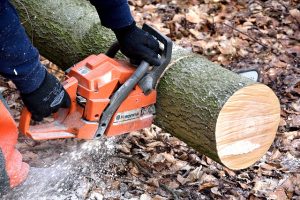
Tree Trimming Service
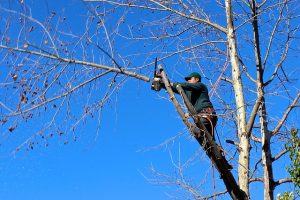
Tree Trimming Service

Tree trimming, also known as pruning, is the process of removing dead, diseased, or overgrown branches from a tree in order to promote healthy growth and maintain its shape. This process is important for a variety of reasons including safety, aesthetic appeal, and the overall health of the tree. One of the most important reasons for tree trimming is safety. Dead or diseased branches can easily fall and cause damage to property or injury to people. Additionally, overgrown branches can grow into power lines, causing power outages or even starting fires. By removing these potentially dangerous branches, tree trimming can help prevent accidents and protect both people and property.

Another important reason for tree trimming is aesthetic appeal. Trees that are overgrown or have unshapely branches can detract from the beauty of a yard or landscape. By removing these branches, the tree’s natural shape and beauty can be restored, making it an attractive addition to any landscape.

Tree trimming is also important for the overall health of the tree. By removing dead or diseased branches, the tree can focus its energy on healthy growth. Additionally, trimming back overgrown branches allows light and air to penetrate the tree’s canopy, which can help prevent the growth of mold and mildew. This can also help reduce the risk of pests and diseases that thrive in dark, damp environments. There are several different techniques that can be used when trimming a tree, depending on the size and type of tree, as well as the specific purpose of the trimming. The three main types of tree trimming are crown cleaning, crown thinning, and crown reduction.

Tree services refer to a range of services related to the care and maintenance of trees. These services can include tree planting, pruning, shaping, cabling and bracing, fertilization, pest and disease management, and tree removal. Tree planting is the process of planting a new tree in a specific location. This can be done for various reasons, such as replacing a tree that has been removed, adding shade or beauty to a property, or improving the environment. Pruning is the process of removing dead, diseased, or damaged branches from a tree. This can be done for various reasons, such as to improve the tree’s overall health, remove branches that are interfering with power lines or buildings, or rove the tree’s appearance. Shaping is the process of trimming and pruning a tree to give it a specific shape. This can be done for aesthetic reasons or to improve the tree’s overall health. Cabling and bracing is the process of providing support to a tree by installing cables and/or braces. This can be done to help support a tree that is at risk of falling over, or to help support a tree that has been damaged by severe weather.

Crown reduction is the most drastic type of tree trimming. It involves removing a large portion of the tree’s canopy in order to reduce the overall size of the tree. This is typically done when a tree has grown too large for its location, or if it is causing damage to nearby structures. It is important to note that tree trimming should always be performed by a professional arborist. A professional arborist has the knowledge and equipment necessary to safely trim a tree, and can ensure that the tree is trimmed in a way that promotes healthy growth and prevents future problems.

Fertilization is the process of providing nutrients to a tree to help it grow and thrive. This can be done to improve a tree’s overall health or to help a tree recover from damage or disease. Pest and disease management is the process of identifying and treating pests and diseases that are affecting a tree. This can be done to improve a tree’s overall health or to prevent the spread of pests or diseases to other trees. Tree removal is the process of cutting down and removing a tree from a property. This can be done for a variety of reasons, such as to remove a tree that is dead or dying, to remove a tree that is causing damage or danger, or to clear land for development.

It’s important to note that tree services should be performed by licensed, trained professionals to avoid any damage to the tree or property, and also to ensure safety.

Tree services refer to a variety of services related to the care and maintenance of trees. These services can include tree pruning, tree removal, tree planting, stump grinding, and more. Tree services are typically provided by professional arborists, who are trained and certified in the proper care and maintenance of trees. Some tree services also include landscaping services, such as lawn care and garden maintenance.

Tree services refer to the various tasks and activities related to the care and maintenance of trees. Some examples of tree services include:
Tree trimming and pruning: This involves removing dead or diseased branches, as well as shaping and shaping the tree to promote healthy growth and prevent potential hazards.
Tree removal: This involves cutting down and removing a tree that is dead, diseased, or poses a danger to property or people.
Stump grinding: This is the process of removing a tree stump by grinding it down to below ground level using a specialized machine.
• Planting and transplanting: This includes planting new trees, as well as transplanting existing trees to different locations.
• Tree health care: This includes diagnosing and treating diseases, pests, and other issues that may be impacting the health of a tree.

• Emergency tree services: This includes providing services for trees that have fallen or are in danger of falling due to severe weather or other reasons.

These are some examples of tree services, but there may be others that are specific to certain regions or industries.

When providing a proposal for a tree removal, an arborists also evaluate the site for stump grinding. While having the stump ground is not always necessary, many people prefer to deal with the stump at the same time as having the tree removed. Stump grinding allows the property owner to use the area where the tree once stood for laying sod or planting a flower bed. The stump grinder also produces mulch that has many uses around the yard. Here are answers to some common questions we get about stump grinding. Tree trimming is the process of removing dead, diseased, or overgrown branches from a tree to maintain its health and appearance. It is an important aspect of tree care, as it can help prevent damage to property and people, and can also improve the tree’s overall health and appearance.

There are several reasons why tree trimming is necessary. First, dead or diseased branches can pose a danger to people and property if they fall. Second, overgrown branches can interfere with power lines, sidewalks, and other structures. Third, trimming can help to promote the tree’s overall health by allowing sunlight and air to reach the inner parts of the tree, which can improve its growth and fruit production.

When it comes to trimming a tree, there are a few things to keep in mind. First, it is important to only remove branches that are dead, diseased, or overgrown. Removing healthy branches can harm the tree and can also lead to an unbalanced shape. Second, it is important to use the proper tools and techniques to avoid damaging the tree. Third, it is important to trim at the right time of year, as some trees have specific pruning needs and may be sensitive to certain types of trimming at certain times of the year.

One of the most important things to consider when trimming a tree is safety. Always wear protective gear, such as goggles, gloves, and a hard hat, and use a sturdy ladder or lift to reach high branches. It is also a good idea to work with a partner or to hire a professional tree trimming service to ensure that the job is done safely and correctly.

When it comes to the tools needed for tree trimming, there are a few basic items that you will need. A good pair of pruning shears, a chainsaw, and a pruning saw are the most essential tools. You may also need a ladder or lift, as well as a pair of safety goggles and gloves to protect yourself while working.

The first step in tree trimming is to identify the branches that need to be removed. Dead branches should be removed first, as they are the most likely to fall and cause damage. Diseased branches should also be removed, as they can spread their disease to the rest of the tree. Overgrown branches should be removed next, as they can interfere with power lines, sidewalks, and other structures.

Once you have identified the branches that need to be removed, it is time to start trimming. When trimming, it is important to make clean, precise cuts. Use a chainsaw or pruning saw to remove large branches, and use pruning shears for smaller branches. Make sure to cut the branch at a slight angle, so that water will run off of the cut. After the tree has been trimmed, it is important to clean up any debris that has fallen to the ground. This includes leaves, twigs, and branches. It is also a good idea to mulch the debris, as it can be used as a natural fertilizer for the tree.

[geocentric_weather id=”32ef9911-1ca7-4f2c-bcea-ecdf60fab5eb”]

[geocentric_about id=”32ef9911-1ca7-4f2c-bcea-ecdf60fab5eb”]

[geocentric_neighborhoods id=”32ef9911-1ca7-4f2c-bcea-ecdf60fab5eb”]

[geocentric_thingstodo id=”32ef9911-1ca7-4f2c-bcea-ecdf60fab5eb”]

[geocentric_busstops id=”32ef9911-1ca7-4f2c-bcea-ecdf60fab5eb”]

[geocentric_mapembed id=”32ef9911-1ca7-4f2c-bcea-ecdf60fab5eb”]

[geocentric_drivingdirections id=”32ef9911-1ca7-4f2c-bcea-ecdf60fab5eb”]

[geocentric_reviews id=”32ef9911-1ca7-4f2c-bcea-ecdf60fab5eb”]
Tree Services

Tree Services

Tree services refer to a range of services related to the care and maintenance of trees. These services can include tree planting, pruning, shaping, cabling and bracing, fertilization, pest and disease management, and tree removal. Tree planting is the process of planting a new tree in a specific location. This can be done for various reasons, such as replacing a tree that has been removed, adding shade or beauty to a property, or improving the environment. Pruning is the process of removing dead, diseased, or damaged branches from a tree. This can be done for various reasons, such as to improve the tree’s overall health, remove branches that are interfering with power lines or buildings, or rove the tree’s appearance. Shaping is the process of trimming and pruning a tree to give it a specific shape. This can be done for aesthetic reasons or to improve the tree’s overall health. Cabling and bracing is the process of providing support to a tree by installing cables and/or braces. This can be done to help support a tree that is at risk of falling over, or to help support a tree that has been damaged by severe weather.

Fertilization is the process of providing nutrients to a tree to help it grow and thrive. This can be done to improve a tree’s overall health or to help a tree recover from damage or disease. Pest and disease management is the process of identifying and treating pests and diseases that are affecting a tree. This can be done to improve a tree’s overall health or to prevent the spread of pests or diseases to other trees. Tree removal is the process of cutting down and removing a tree from a property. This can be done for a variety of reasons, such as to remove a tree that is dead or dying, to remove a tree that is causing damage or danger, or to clear land for development.

It’s important to note that tree services should be performed by licensed, trained professionals to avoid any damage to the tree or property, and also to ensure safety.

Tree services refer to a variety of services related to the care and maintenance of trees. These services can include tree pruning, tree removal, tree planting, stump grinding, and more. Tree services are typically provided by professional arborists, who are trained and certified in the proper care and maintenance of trees. Some tree services also include landscaping services, such as lawn care and garden maintenance.

Tree services refer to the various tasks and activities related to the care and maintenance of trees. Some examples of tree services include:
• Tree trimming and pruning: This involves removing dead or diseased branches, as well as shaping and shaping the tree to promote healthy growth and prevent potential hazards.
• Tree removal: This involves cutting down and removing a tree that is dead, diseased, or poses a danger to property or people.
• Stump grinding: This is the process of removing a tree stump by grinding it down to below ground level using a specialized machine.
• Planting and transplanting: This includes planting new trees, as well as transplanting existing trees to different locations.
• Tree health care: This includes diagnosing and treating diseases, pests, and other issues that may be impacting the health of a tree.
• Emergency tree services: This includes providing services for trees that have fallen or are in danger of falling due to severe weather or other reasons.
These are some examples of tree services, but there may be others that are specific to certain regions or industries.

Process of Tree Service

The process of tree service typically includes the following steps:
1. Inspection: A tree service professional will first inspect the tree(s) in question to assess their condition and determine the appropriate course of action.
2. Pruning: Pruning involves removing dead, diseased, or damaged branches to promote the overall health and safety of the tree.
3. Removal: In some cases, it may be necessary to remove a tree entirely. This can be due to disease, damage, or the tree being in a dangerous location.
4. Stump Grinding: After the tree is removed, the stump is often ground down to prevent regrowth and make the area safe for walking or mowing.
5. Planting: Tree Service professional can also plant a new tree to replace the removed one.
6. Cleanup: After the work is completed, the tree service professional will clean up the area, removing any debris and leaving your property looking neat and tidy.

Government agencies are responsible for managing and maintaining public lands and resources, including trees. This can include planting and maintaining trees in public parks and forests, as well as regulating tree cutting and removal on public lands. Tree services, on the other hand, are typically private companies that provide services such as tree pruning, removal, and planting on private property. Some government agencies may also provide tree services to the public, such as removing hazardous trees from public rights-of-way. All companies should be insured and bonded. For example, if you have an unsightly or dead tree that you need to move make sure that when the job is finished that the company will take away every piece of the tree or trees and that the removal has been done efficiently and safely.

Importance of Tree Services with government

Tree services are important for several reasons:
1. Safety: Trees that are overgrown or damaged can pose a danger to people and property. Tree trimming and removal can help ensure the safety of individuals and buildings.
2. Aesthetics: Tree pruning and shaping can enhance the appearance of a property and increase curb appeal.
3. Health: Trees that are not properly maintained can become diseased or infested with pests, which can cause them to die or become unstable. Tree services can help maintain the health of trees and prevent the spread of disease to other trees.
4. Utility: Tree services can help maintain the utility of trees, such as by preventing damage to power lines, or ensuring the growth of trees in a way that they don’t interfere with buildings or other structures.
5. Environmental benefit: Trees provide many environmental benefits, such as absorbing carbon dioxide, improving air quality, and providing habitats for wildlife. Proper tree care can help ensure that these benefits are maximized.

A knowledgeable tree service company will also be happy to give a potential client free estimates of what they are going to do and the cost for each service along with other information pertinent to the estimate. You should make sure that you get at least two estimates and compare them before making your final decision. One thing that the homeowner should make sure is in the estimate is that they will do a total cleanup along with the removal of any debris from the job. Many reputable tree service companies will also take the time to discuss with the homeowner any landscape goals they have. They will be able to show the homeowner which trees in your yard that could hinder other grasses or plant growths in the area. If the tree service company has looked your trees over and spots any diseases they will tell you about them so you can have them treated so the trees will not die.

Tree services encompass a wide range of activities related to the care and maintenance of trees. Some of the most common services include:
• Tree pruning: This involves removing dead, diseased, or damaged branches from a tree to promote healthy growth and improve the tree’s appearance. Pruning can also be used to shape a tree or to reduce its size.
• Tree removal: This service involves cutting down a tree that is dead, dying, or posing a safety hazard. Tree removal can be a complex and dangerous task, and should only be performed by trained professionals.
• Tree planting: This service involves planting new trees in a landscape. Arborists can help choose the right tree species for a specific location and provide guidance on proper planting techniques.
• Stump grinding: This service involves using a specialized machine to grind down the remains of a tree trunk after it has been cut down. This can be done to remove an unsightly stump or to prepare the area for landscaping or construction.
• Tree fertilization: This service involves applying fertilizer to a tree to promote healthy growth. Arborists can determine the appropriate fertilizer and application method for a specific tree species.
• Tree disease management: This service involves diagnosing and treating diseases that affect trees. Arborists are trained to identify common tree diseases and use appropriate methods to control or eradicate them.
• Tree cabling and bracing: This service involves installing support systems to help strengthen a tree that is at risk of failure due to structural weakness or damage.
• Tree risk assessment: This service involves evaluating the potential risks posed by a tree, such as the likelihood of failure or the potential for damage to property or people.

Overall, tree services help to ensure the health, safety, and beauty of trees in the urban and rural landscape, providing benefits to both the tree, the local ecosystem, and the community.

[geocentric_weather id="4134af15-b02c-4fe0-bd45-fb0e6efba429"]

[geocentric_about id="4134af15-b02c-4fe0-bd45-fb0e6efba429"]

[geocentric_neighborhoods id="4134af15-b02c-4fe0-bd45-fb0e6efba429"]

[geocentric_thingstodo id="4134af15-b02c-4fe0-bd45-fb0e6efba429"]

[geocentric_busstops id="4134af15-b02c-4fe0-bd45-fb0e6efba429"]

[geocentric_mapembed id="4134af15-b02c-4fe0-bd45-fb0e6efba429"]

[geocentric_drivingdirections id="4134af15-b02c-4fe0-bd45-fb0e6efba429"]

[geocentric_reviews id="4134af15-b02c-4fe0-bd45-fb0e6efba429"]

Tree Cutting Services

Tree Cutting Services

A feller buncher is a type of harvester used in logging. It is a motorized vehicle with an attachment that ca

n rapidly gather and cut a tree before felling it.

Feller is a traditional name for someone who cuts down trees, and bunching is the skidding and assembly of two or more trees. A feller buncher performs both of these harvesting functions and consists of a standard heavy equipment base with a tree-grabbing device furnished with a chain-saw, circular saw or a shear—a pinching device designed to cut small trees off at the base. The machine then places the cut tree on a stack suitable for a skidder, forwarder, or yarder for transport to further processing such as delimbing, bucking, loading, or chipping.

Some wheeled feller bunchers lack an articulated arm, and must drive close to a tree to grasp it.

In cut-to-length logging a harvester performs the tasks of a feller buncher and additionally does delimbing and bucking.

Components and Felling attachment

Feller buncher is either tracked or wheeled and has self-levelling cabin and matches with different felling heads. For steep terrain, tracked feller buncher is being used because it provides high level of traction to the steep slope and also has high level of stability. For flat terrain, wheeled feller buncher is more efficient compared to tracked feller buncher. It is common that levelling cabins are matched with both wheeled and tracked feller buncher for steep terrain as it provides operator comfort and helps keeping the standard of tree felling production. The size and type of trees determine which type of felling heads being used.

Types of felling heads

Disc Saw Head – It can provide a high speed of cutting when the head is pushed against the tree. Then, the clamp arms will hold the tree when the tree is almost completed cutting. It is able to cut and gather multiple trees in the felling head. The disc saw head with good ground speed could provide high production which allows it to keep more than one skidders working continuously.

Shear Blade Head – It is placed against the tree and the clamp arms will hold the tree firmly. Then, the blade will activate and start cutting the tree. Same as disc saw head, it can hold multiple trees before they are placed on the ground.

Chain Saw Head – The floppy head provides minimal control to place the trees on the ground. It might not suit to collect the cut trees or gather the cut stems in the felling head.

Productivity

Comparing other harvesting systems such as chainsaw and harvester, feller buncher has the relatively high productivity among them. The weekly production of the feller buncher was 627 cubic meters of usable logs, while the chainsaw system and harvester system could produce 163 cubic meters and 239 cubic meters respectively. There are several factors affecting the level of productivity of the feller buncher. They include characteristics of stand, terrain conditions, operation location, and the performance of the operator. Many studies indicated that the trees size and the gradient of the slope are the major factors impacting the overall productivity. There was a research suggested that productivity has a significant positive relationship with the tree size which means the larger stem size, larger tree height or larger diameter at breast height (DBH) results in a high productivity of the feller buncher. Terrain conditions such as ground slope and terrain roughness have a significant negative relationship to the productivity of feller buncher which means the steeper of the land or rough terrain condition can bring negative effect to the productivity. One of the studies had found that feller buncher might reduce its productivity when performing operation on a very uneven surface with slopes of more than 20%. However, larger tree size does not necessarily lead to high productivity. The same study compared the operation time when performing clear-cut of the stands with two different average DBH, 24.6 cm and 34.3 cm respectively. Result showed that the productivity when operating the second stand decreased by 32.3% because the time consumption was doubled when larger stands required two-stage of cutting operation.

Cost-effectiveness

The purchase cost of a feller buncher is around $180,000 and its fuel consumption and lubricant consumption is high among other mechanical harvesting equipment. The feller buncher also has the highest hourly cost which is around $99.5 when comparing other equipment such as a harvesters and grapple skidders. Although the total cost of feller buncher is high in overall, the unit production price is the lowest which explains why feller buncher is considered the most cost-effective harvesting equipment. The average unit cost of the feller buncher is $12.1/m3 while the unit cost of the harvesters is $16.5/m3. The unit cost of the feller buncher is primary affected by the tree size and the tree volume. The unit felling cost is lower when the tree size increased. For example, tree with 5 inches at DBH has the unit cost of $70 while tree with 15 inches at DBH has the unit cost of $12. As the cost of feller buncher is high, only large tree volume can produce more profit to cover the high average cost. In terms of stump height, lower stump height can maximise the use of natural resources and prevent wood waste. Mechanical felling such as using feller buncher can prevent 30% of value loss caused by the high stumps.

Maintenance

Feller buncher requires daily maintenance before operation and some components only require periodic maintenance. It could ensure the safety of operators and all the workers around the operation. If damaged or faulty machine is operated, it could result in further damage to the machine which can be more expensive to repair.

Daily or Every 8 hours

Modern style Tigercat feller buncher. Commonly referred to as a tree cutter

Lubrication

The felling head is considered one of the hardest part of the feller buncher and it is necessary to apply lubricant to every joint for daily maintenance. It is suggested to apply lubricant to saw head clamps, wrist attachment and driveshaft bearings during every maintenance. The use of grease should meet the extreme pressure performance standard and contains 3% of molybdenum disulphide (MoS2).

MoS2 can prevent the wear takes place where the metal to metal contact exists.

Fuel

It is also important to check if there is enough fuel for the operation. Feller bunchers use diesel fuel to generate power. In most of the cases, the fuel is preferably to have cetane number greater than 50 (minimum 40). This is suitable when undergo operation for temperature below -20 °C (-4 °F) or elevations more than 1500m (5000 Ft.). The Cloud Point of the fuel is preferably at least 5 °C (9 °F) lower than the expected low temperature. It is also suggested that the sulphur content of the fuel should not be more than 0.5% as it could reduce 50% of the service interval for the engine oil and filter.

Older style felling head that uses a bar and chain to cut trees instead of the more modern saw disk.

Engine coolant

Operators have the responsibility to check the engine coolant level of the feller buncher before starting the engine. The coolant prevents cylinder linear erosion and pitting, and provides protection during extremely low temperature for up to -37 °C (-34 °F). It is recommended to use coolants for heavy-duty engines which are relatively low silicate ethylene glycol base. There are two forms of coolants: pre-diluted or concentrate. Water is required to dilute the concentrated coolant with an approximate ratio of 50:50. The use of supplemental coolant addictive might be also required in the concentrated coolant in order to provide protection against corrosion. Distilled, deionised, or demineralised water is suggested for mixing the concentrated coolant because when some water compositions mix with other substances could form a precipitate, causing damage or blockage in the engine.

Risk management approach

During maintenance, there are common working hazards related to two main areas: working environment and exhaust system. When working on the exhaust system, be aware of the hot components around the engine. Workers could wear personal protective equipment such as safety spectacles, heat-proof gloves and safety boots. When feller buncher is elevated for service or maintenance, falls from height might happen. Related injuries could be avoided by ensuring dryness of all the walking surface, wiping any oils or other liquid substances on the floor. Also, ensure the feller buncher is parked on a level and stable ground during maintenance. When getting in and out of the machinery, workers are suggested to use three point of contact with two hands holding the handrails and one foot on a step. It is also important to provide sufficient lighting for all the working sites at all time of service.

Safety

Logging is considered one of the most dangerous occupations. This is because many loggers are injured by the falling objects which are large in size and heavy. “Struck by object” is the most common injuries that reported in the logging industry due to the manual use of equipment during the logging procedures. There is evidence that using mechanized harvesting equipment could reduce the rate of “struck by” injuries. One study indicates that total injury claims could be reduced by 14.2%, while the “struck by” injuries could be reduced by 8.2%, when comparing the changes before and after the use of feller buncher. The significant decline in the number of “struck by” injuries after using the feller buncher in the logging companies supported the statement that using mechanized harvesting equipment could lessen overall injuries. The evidence also found that the rate of injuries in the logging companies without using feller bunchers had increased slightly throughout a period of time, increasing from 14.5% to 17.5%, in five years. In terms of trees fatality, areas with lower levels of mechanization in harvesting resulted in higher rate of trees fatality. For instance, in Eastern areas of the United States, research which compared the conventional and mechanized logging operations, indicated the number of injuries, when using the conventional approach, is three times greater than that of using the mechanized equipment such as a feller buncher. However, mechanized related injury could be raised accordingly, especially when performing machine maintenance or repair. These kinds of injuries could be serious and also costly.

[geocentric_weather id=”4108152b-ef86-48a4-8627-1083cde7dee1″]

[geocentric_about id=”4108152b-ef86-48a4-8627-1083cde7dee1″]

[geocentric_neighborhoods id=”4108152b-ef86-48a4-8627-1083cde7dee1″]

[geocentric_thingstodo id=”4108152b-ef86-48a4-8627-1083cde7dee1″]

[geocentric_busstops id=”4108152b-ef86-48a4-8627-1083cde7dee1″]

[geocentric_mapembed id=”4108152b-ef86-48a4-8627-1083cde7dee1″]

[geocentric_drivingdirections id=”4108152b-ef86-48a4-8627-1083cde7dee1″]

[geocentric_reviews id=”4108152b-ef86-48a4-8627-1083cde7dee1″]