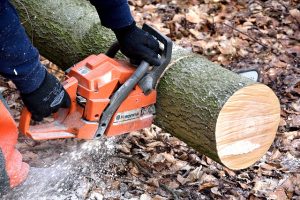
Tree Removal Salt Lake City
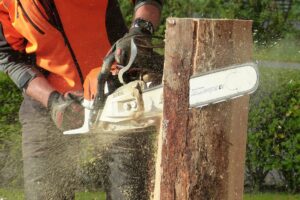
Tree Removal Midway Utah

Tree Removal

Tree removal is essential to enhance aesthetics and to get rid of unwanted presence of trees. However, tree removal is not an easy job to take, that is why, there are tree removal service providers who hire professional arborists who can do the tough job for them.
If you learn that you will need the service of tree removal providers because there is a tree growing in your driveway or the trees that are growing in your yard is already invading your other property, then you definitely need a tree removal service.

Nevertheless, there are also some things that can be done so that you would be paying too much amount of money for a tree removal service. Such favorable services where you can benefit can be so inexpensive and to some extent completely gratuitous. Here are some of the options you can consider if you need tree removal:

Do it yourself approach. You can count on your own means/resources by seeking the help of your husband, other family members, and friends. You probably have a friend who has a chainsaw, a truck that lift tree limbs, and other equipment that can be used in removing trees.

If the tree is over power lines, you can ask for a tree removal service from power line companies and they will do the job for you.
Seek the help of your municipality. Your municipal can provide you a free tree removal service courtesy of the municipal government itself.

Advertise a tree removal in the paper. There could be somebody out there that can get rid the tree for you and take the tree for himself.

Seek the help of a logger. Your local area will probably have loggers who are willing to do the tree removal for you.
Trees can be described as a blessing. It provides beauty to your property, shade against sunlight and cool air especially during summer. Trees are also valuable to the environment. That is why laws have been created against unnecessary tree cutting. Environmentalists continue to support illegal tree removal.

Ornamental trees add magnificence to your landscape Nonetheless, it is necessary to cut down trees under several circumstances. Trees that have wasted should be taken away from your property. It may also be necessary to prune trees if these attract unwanted animals or rodents to your homes. Dead leaves, sticks and larger boughs that have rotted can cause a lot of inconvenience to you. The roots of trees can cause crevices in the flooring and walls. It can destroy or damage pipelines and other utilities.

Trees that grow too high may stretch towards electrical cables and cause problems. Tree branches can also obstruct views. In short, tree removal is needed when these situations occur. Homeowners may be compelled to take away trees to make way for a particular construction project. You have the option to cut down unwanted trees provided you have the expertise and equipment. Otherwise, get the services of professional tree removal services. These companies will give the service you like for a minimal cost.

The process of cutting trees is a complicated task. It has to be carried out by professionals who can cut down trees without destroying any structures. The task is more dangerous if the trees stand near electrical posts and wires. Trees located near edifices and fences are not easy to remove while those located in open spaces are easier to remove. Costs depend on the tallness, thickness, form and quantity of branches.

Expert cutters know how to take care of cutting timber. These service providers do not simply cut a tree without a plan. Measurements have to be taken at the start so that the falling log does not hit any person, house, vehicle or electric post and wires. Trees should be cut at the correct angle so it goes down on the proper direction.

Stump removal is also difficult. It calls for the work of experts to avoid damages. Tree cutting services know how to operate complicated gear such as cranes, special ladders and ropes. These people also consider the safety factor and disease control aspects so you can be assured of a complete service even if you have to spend some money.

When there is no target there is no hazard.

Consider a tree hazardous if a target can be hit when falling. A target can be a building, a vehicle or a person within the reach of a plunging tree or one of its parts. When there is no target present, is better to leave the tree intact. If required cut only a few branches so you don’t abrupt the ecosystem of trees nearby.

How to inspect your trees

We are going to look at the tree from top to bottom reviewing its three main parts.

The crown

A hazardous tree will show these characteristics on its crown:

Dieback: when branches in the upper crown die from the top down. The stress provoked by extended periods of drought, insects or root disease creates dieback. Opportunistic pests, bugs, and fungi invade stressed trees.

V-shape forks: extreme weather usually triggers a failure on these weak points. The trees more susceptible to break because of V-shaped forks are Oak, maple, willow, and elm.

Lopsided crowns: often trees end up with lopsided crowns when they get surrounded by other trees.

Leaning: Trees that grew leaned are less of a hazard than those that leaned due to the wind or roots problems. An indicator of a risky lean problem is when uplifted soil shows opposite the lean.

The trunk

One of the major causes of tree failure is when they get weakened by decay produced by fungi. Healthy trees bend and sways. But if they are decaying their tissues are unflexible and crack and break with ease.

The decay fungi need an opening in tree bark to enter the tree such as wounds caused by lightning, fire, insects, birds and other animals. The wind can make branches rub each other and remove the bark. Avoid human activities such as carving initials in the bark.

The roots

They are very important because they absorb water and essential elements and it anchors the tree to the ground. If 50% of the roots are compromised, you need to do a tree removal.

Here are above ground clues of poor root conditions:

Thin crowns with dwarfed off-color yellowish leaves
Stunted growth
Soil compaction
Erosion
Construction activities
Soil fill
Root rot fungi

What should you do?

You should inspect every tree that is likely to have problems. To prevent accidents, you have to do these inspections periodic and thorough. At least once a year, but we recommend two (summer and winter).

Treatments

To keep the tree in the landscape, on rare occasions, you can do pruning, cabling and bracing. But most often tree removal is the only solution to a hazardous tree.

Prevention

Prevention is the best action, you should start a health program as soon as possible. If you want to prevent many problems in the future, always do a proper choice and placement of the trees. Homeowners often create hazards when they buy and plant a tree with no planning.

During construction we take special care of your trees. Be attentive when installing a driveway and digging utility lines. Do not let the construction equipment scrape the bark from the trees. Signs of construction stress on trees show up either immediately or years ahead.

Why Would You Need Tree Removal Services

Trees have always provided humans with countless benefits. First, trees are magnanimous beings. It provides beautification. It offers shelter and shade. It even protects us from strong rains. What is even better about trees is that it gives out oxygen after filtering in the poisonous and deadly carbon dioxide. But sometimes trees can do more harm than good. When this unfortunate situation arises, there is nothing else to do but hire tree removal services immediately and let them handle the dangerous cutting and trimming of trees.

Why is it Essential to Remove Trees?

When a tree has taken its toll and is left uncared for, it usually rots on its own. When this happens, it can pose more danger than good in any property or community. Just imagine this scenario: Your children and their friends are playing under a big pine tree located at the community park. Suddenly, you heard a gush and saw that a big branch of the pine tree fell to the ground. Your kids are nowhere in sight. What do you think happened to them? Good thing this is only make believe.

Yes, it is life threatening. The once beautiful pine tree is now a danger to society. So before your kids and their friends suffer terrible injuries or worse, die because of the rotting tree, you need to call tree removal services experts.

Saving the Trees

Other than rotting trees, preventive maintenance is a better way to preserve these God given beings. Sometimes cutting off branches will make its existence longer and make the tree healthier. With well maintained trees, it is safer to be in the same vicinity with. If it is not too late, these wonderful trees can be nursed. Only tree services companies know what to do and you need to inform them. Ask for appropriate tree programs to save the trees in your community.

[geocentric_weather id=”4134af15-b02c-4fe0-bd45-fb0e6efba429″]

[geocentric_about id=”4134af15-b02c-4fe0-bd45-fb0e6efba429″]

[geocentric_neighborhoods id=”4134af15-b02c-4fe0-bd45-fb0e6efba429″]

[geocentric_thingstodo id=”4134af15-b02c-4fe0-bd45-fb0e6efba429″]

[geocentric_busstops id=”4134af15-b02c-4fe0-bd45-fb0e6efba429″]

[geocentric_mapembed id=”4134af15-b02c-4fe0-bd45-fb0e6efba429″]

[geocentric_drivingdirections id=”4134af15-b02c-4fe0-bd45-fb0e6efba429″]

[geocentric_reviews id=”4134af15-b02c-4fe0-bd45-fb0e6efba429″]
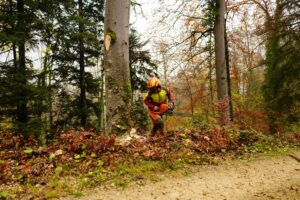
Tree Removal Service

Tree Removal Mapleton Utah

Tree Removal Service

Tree removal refers to the process of cutting down and removing a tree from a specific location. This can be done for a variety of reasons, such as to clear land for development, to remove a dead or diseased tree, or to improve the overall health of a forest. The process typically involves cutting down the tree using specialized equipment and then removing the stump and debris from the area. Tree removal can be dangerous and should only be done by trained professionals.

Tree removal, also known as tree cutting, is the process of cutting down and removing a tree from a specific location. This can be done for a variety of reasons, such as to clear land for development, to remove a dead or diseased tree, or to improve the overall health of a forest.

The process typically begins with an assessment of the tree, including factors such as its size, location, and condition. Based on this assessment, a plan is created for how the tree will be removed. The tree is then cut down using specialized equipment such as chainsaws, felling wedges, and tree-climbing gear. The tree cutter will carefully cut the tree in a way that will minimize damage to surrounding property and minimize the risk of injury to themselves and others.

After the tree is cut down, the stump is typically removed using a stump grinder. This is a machine that grinds the stump into small pieces, allowing for easy removal and disposal. The debris from the tree, including branches and leaves, is also removed from the area.
Tree removal can be dangerous and should only be done by trained professionals. Tree cutting requires knowledge of tree biology, safety and proper use of equipment and knowledge of local laws and regulations. Improper tree removal can lead to damage to property and injury to people.

Additionally, tree removal can have a significant impact on the environment and it is important to consider the ecological effects of removing a tree. For example, removing a mature tree can have a negative impact on local wildlife, and removing a tree with a large canopy can affect the microclimate of the area.

Therefore, it is important to consider the reasons for removing a tree and weigh the potential benefits and drawbacks before proceeding with the removal. In some cases, it may be more appropriate to preserve the tree or consider other options such as pruning or cabling.
Tree removal can be a complex process that requires careful consideration of several factors, including the health and condition of the tree, its location, and any potential hazards or risks it may pose. In some cases, a tree may need to be removed due to disease or damage, while in other cases it may simply be in the way of construction or other development.

Before removing a tree, it is important to consult with a certified arborist who can assess the tree’s condition and determine whether or not it is safe to remove. If the tree is determined to be a hazard, it may need to be removed as soon as possible. If the tree is healthy, it may be possible to save it through pruning or other means.

When removing a tree, it is important to use proper techniques and equipment to ensure that the tree is taken down safely and without causing damage to surrounding property. This may include using a crane or other specialized equipment to remove the tree in sections, or using a tree spade to dig up the tree and transplant it elsewhere.

After the tree is removed, it is important to properly dispose of the debris, which may include chipping or mulching the wood, or taking it to a landfill. Additionally, it is important to consider what will be planted in place of the removed tree, as well as the overall impact on the surrounding ecosystem.

Overall, tree removal is a serious decision that should not be taken lightly. It is important to consult with professionals, consider the potential risks and benefits, and have a plan in place for removing the tree safely and responsibly.

Tree Removal Services, Relocation and Stump Grinding

Another reason for tree removal services professionals is when you want to transfer a tree from one location to another. Let us say you want to bring with you your tree from your old home to your new home. This is possible but only the experts can handle this job. A lot of homeowners do this project on their own and end up with two things: dead tree or injured owner. To avoid these two concerns, you have to let the specialists handle the relocation.

Another service called stump grinding is also a job for tree removal services companies. There are times when old trees fall or you may have managed to cut your true but the stump and the roots are still embedded. This cannot be removed in one, two or more sessions. You need skilled people to grind the stump and make the lot area plantable by another tree and some plants once again.

Do it yourself approach. You can count on your own means/resources by seeking the help of your husband, other family members, and friends. You probably have a friend who has a chainsaw, a truck that lift tree limbs, and other equipment that can be used in removing trees.

If the tree is over power lines, you can ask for a tree removal service from power line companies and they will do the job for you.
Seek the help of your municipality. Your municipal can provide you a free tree removal service courtesy of the municipal government itself.

Advertise a tree removal in the paper. There could be somebody out there that can get rid the tree for you and take the tree for himself.

Seek the help of a logger. Your local area will probably have loggers who are willing to do the tree removal for you.
Trees can be described as a blessing. It provides beauty to your property, shade against sunlight and cool air especially during summer. Trees are also valuable to the environment. That is why laws have been created against unnecessary tree cutting.

Environmentalists continue to support illegal tree removal.

Ornamental trees add magnificence to your landscape Nonetheless, it is necessary to cut down trees under several circumstances. Trees that have wasted should be taken away from your property. It may also be necessary to prune trees if these attract unwanted animals or rodents to your homes. Dead leaves, sticks and larger boughs that have rotted can cause a lot of inconvenience to you. The roots of trees can cause crevices in the flooring and walls. It can destroy or damage pipelines and other utilities.

Trees that grow too high may stretch towards electrical cables and cause problems. Tree branches can also obstruct views. In short, tree removal is needed when these situations occur. Homeowners may be compelled to take away trees to make way for a particular construction project. You have the option to cut down unwanted trees provided you have the expertise and equipment. Otherwise, get the services of professional tree removal services. These companies will give the service you like for a minimal cost.

The process of cutting trees is a complicated task. It has to be carried out by professionals who can cut down trees without destroying any structures. The task is more dangerous if the trees stand near electrical posts and wires. Trees located near edifices and fences are not easy to remove while those located in open spaces are easier to remove. Costs depend on the tallness, thickness, form and quantity of branches.

Expert cutters know how to take care of cutting timber. These service providers do not simply cut a tree without a plan. Measurements have to be taken at the start so that the falling log does not hit any person, house, vehicle or electric post and wires. Trees should be cut at the correct angle so it goes down on the proper direction.

Stump removal is also difficult. It calls for the work of experts to avoid damages. Tree cutting services know how to operate complicated gear such as cranes, special ladders and ropes. These people also consider the safety factor and disease control aspects so you can be assured of a complete service even if you have to spend some money.

Picking the Right Professionals

Look for crews with ample experience in years, with valid certifications and proper studies. Check for customer feedbacks and those people who were satisfied by their work. Compare prices between companies on top of the mentioned requisites of these tree removal services companies. Then, pick the right group for your needs.

At times a tree removal service is needed to prevent injuries from broken trees. If you think your home needs a hazardous tree removal service don’t wait until it’s too late. Contact your local tree care professionals today to learn more about tree care and how it affects your home.

[geocentric_weather id=”4134af15-b02c-4fe0-bd45-fb0e6efba429″]

[geocentric_about id=”4134af15-b02c-4fe0-bd45-fb0e6efba429″]

[geocentric_neighborhoods id=”4134af15-b02c-4fe0-bd45-fb0e6efba429″]

[geocentric_thingstodo id=”4134af15-b02c-4fe0-bd45-fb0e6efba429″]

[geocentric_busstops id=”4134af15-b02c-4fe0-bd45-fb0e6efba429″]

[geocentric_mapembed id=”4134af15-b02c-4fe0-bd45-fb0e6efba429″]

[geocentric_drivingdirections id=”4134af15-b02c-4fe0-bd45-fb0e6efba429″]

[geocentric_reviews id=”4134af15-b02c-4fe0-bd45-fb0e6efba429″]

Tree Removal Service Near Me

 Tree Removal Service Near Me

Tree Removal Service Near Me

How to get rid of tree stumps is one of the most frequently asked question in the industry. Once you have had a tree removed you are left with a typically unsightly reminder, the stump. Tree stumps are an eyesore, a tripping hazard, and they can attract unwanted pests like termites or even fungi and bacteria. If left to simply decay and rot away on its own, without any sort of treatment, a stump can take up to ten years to disappear. When it comes to rotting a tree stump in Utah, the rate of decay depends on many different factors such as species of tree, size of the tree, and the climate and weather conditions.

As your leading Utah arborist, we do stump grinding in the Utah and surrounding area, although due to the demand we do have to limit our grinding services and can only offer it to current tree service clients and not as a standalone service.

To remove a tree stump you can try to tackle the job yourself, although stump grinders are quite heavy and can be difficult to use at times. So how do you get rid of a tree stump then? What is the best way? Well, the answer is in the original suggestion of letting it rot away, but doing so quickly.

How To Get Rid Of A Tree Stump Fast?

The fastest way to remove a tree stump, with and without using a grinder, is the chemical method. By applying chemicals to holes drilled into the stump, you speed up the natural decay process and the remaining tree fibers and roots will break down much more quickly. It is considered one of the best ways to remove a tree stump from your yard. Here is how to use this method by following these steps.

DIY Steps To Rotting A Tree Stump From A Leading Arborist:
Begin on a dry day or after a number of dry days if possible. This way the tree stump will be looking for liquid and nutrients and will soak up the chemicals faster.

If you are capable, use a chainsaw to cut the remaining part of the tree as close to the ground as possible. By doing this the chemicals will have less material to eat through. Chainsaws can be dangerous though, so make sure you always use caution, wear steel-toed boots and eye protection.

Once the tree stump is as close to the ground as you can comfortably get it to go, drill a number of holes into the top of the stump and along the sides in a downward direction. The bigger the drill bit the better, and each of the holes should be a few inches deep.
After drilling the holes into the stump in different places, you will apply the chemicals that will break down the remaining wood.

Utah does have strict legal restrictions about the kind of chemicals you can purchase for this sort of project. Ideally, you would want a commercial fertilizer that is high in nitrogen, since it will give you the fastest results, but cow manure is also effective. Another more natural alternative is Epsom salt. It is also a cost-effective solution as a 19lbs page starts at $10. It has similar dissolving properties to nitrogen but is a more organic approach. When you have chosen the chemical you will use, pack the holes with as much of it as you can.

Then soak the ground around the stump and wet the top and sides of the stump. After the stump is wet, cover it with a plastic tarp to trap the moisture around the stump. Moisture is ultimately what will help the chemicals break down the wood particles faster.
The next step is to apply mulch over the top of the plastic tarp. Organic mulch, like hay or tree bark, is best for this task as it will retain more moisture and help to keep the tarp in place.

You can use rocks and stones to weigh down the tarp further to help keep it in place, although this step is considered optional.
Once you have completed all of these steps, you are officially rotting a tree stump. This process is a speeding up of nature, and we all know that nature can take its time, so you should expect that it will take some time to work. How can you speed up the stump rot process even more? You can repeat the rotting steps periodically if you notice the mulch has grown dry.

How Much Does It Cost To Remove A Stump?

The overall cost for a stump removal is largely dependent on the method you choose to use. If you chose to do it yourself, it would be the cost of materials needed. Whereas, if you live in the nearby Utah area, with easy access to the stump, the average cost is about $6 per inch in diameter with $150-$200 minimum charge.

Looking To Remove a Tree Stump Quickly?

Ultimately, the quickest way to remove your tree stump and return your yard to a flat surface is the method of stump grinding. Although our grinding services are limited, if you are in need of a tree removal service in the Utah, area, or if you are looking to get some stumps removed don’t hesitate to contact the tree experts.

If you’re not a current or past tree client and have a stump you’d like removed, read more about stump rot and how to safely remove the tree stump yourself.

When your stump is ground, you can expect that there will be no masses of the stump left underground. The stump grindings, which are the wood shavings from the stump mixed with dirt, are left behind. You can use these grindings as mulch around your yard. Please remove the grindings prior to replanting any plants or trees in that area.

Stump Grinding FAQs

What is the average cost for stump grinding?

If you live in the nearby Utah Metro area with easy access to the stump, stump grinding cost averages about $6 per inch in diameter with a $150-$200 minimum. Anything that makes the stump harder to access and remove such as a fence or retaining wall or anything breakable such as a flagstone patio would increase the price from there. Also removing the stump grindings is almost always an additional charge.

Is It better to grind a stump or remove it?

There are many ways how to get rid of tree stumps, and there are advantages and disadvantages for either removing a stump or grinding it. For removing a stump the advantage is there is no stump grinding left behind. The disadvantages are that removing all but the smallest stumps usually requires large equipment such as a loader or excavator. In addition, it is usually pretty hard to find a place to dispose of them. For grinding a stump the advantages are that it can be done to almost any stump in any location or a reasonable fee and the disadvantages are that the grinding as usually left behind for the property owner to deal with.

Can you grind down a tree stump with a chainsaw?

There are stump grinders that attach to a chainsaws powerhead, but grinding a stump with a regular chainsaw would be exceptionally difficult as the chain would dull every time it hit even a small amount of dirt. It also sounds very dangerous.

Can I use ground up tree stump as mulch?

Yes, a ground-up tree stump makes an excellent mulch product.

How much does it cost to rent a stump grinder from Home Depot?

In the Utah Metro area $299 per day and $209 for 4 hours as of 3/20/19 to rent a grinder for stump removal in Utah, OR.

Does stump grinding kill roots?

No, in fact, the roots are sometimes spurred to grow more from the shock of having the tree removed and stump ground out.

Does tree removal include the stump?

The answer is almost always no. The removal of the stump in the ground is for an additional fee. Tree removal bids are very specific so any extra services such as stump grinding, wood removal, or tree removal permits are not included unless expressly stated.

Will tree stumps attract termites?

Yes, but not all termites will damage your home. It will take an exterminator to determine which kind you have should your stump become infested.

Can a tree grow back from a stump?

Depending on the type of tree they can grow back but this would not be a tree that you would want to keep as its structure would be compromised and thus it would be likely to fail and damage your property.

Contact the tree experts about stump removal in Utah

If you live in the Utah area and are looking to have a tree removed and are also interested in stump removal and grinding contact our nearby team of Utah stump grinding service professionals.

[geocentric_weather id=”51f0d0df-8f6b-49d8-ba1d-bc790b447a14″]

[geocentric_about id=”51f0d0df-8f6b-49d8-ba1d-bc790b447a14″]

[geocentric_neighborhoods id=”51f0d0df-8f6b-49d8-ba1d-bc790b447a14″]

[geocentric_thingstodo id=”51f0d0df-8f6b-49d8-ba1d-bc790b447a14″]

[geocentric_busstops id=”51f0d0df-8f6b-49d8-ba1d-bc790b447a14″]

[geocentric_mapembed id=”51f0d0df-8f6b-49d8-ba1d-bc790b447a14″]

[geocentric_drivingdirections id=”51f0d0df-8f6b-49d8-ba1d-bc790b447a14″]

[geocentric_reviews id=”51f0d0df-8f6b-49d8-ba1d-bc790b447a14″]

Tree Cutting Services

Tree Cutting Services

A feller buncher is a type of harvester used in logging. It is a motorized vehicle with an attachment that ca

n rapidly gather and cut a tree before felling it.

Feller is a traditional name for someone who cuts down trees, and bunching is the skidding and assembly of two or more trees. A feller buncher performs both of these harvesting functions and consists of a standard heavy equipment base with a tree-grabbing device furnished with a chain-saw, circular saw or a shear—a pinching device designed to cut small trees off at the base. The machine then places the cut tree on a stack suitable for a skidder, forwarder, or yarder for transport to further processing such as delimbing, bucking, loading, or chipping.

Some wheeled feller bunchers lack an articulated arm, and must drive close to a tree to grasp it.

In cut-to-length logging a harvester performs the tasks of a feller buncher and additionally does delimbing and bucking.

Components and Felling attachment

Feller buncher is either tracked or wheeled and has self-levelling cabin and matches with different felling heads. For steep terrain, tracked feller buncher is being used because it provides high level of traction to the steep slope and also has high level of stability. For flat terrain, wheeled feller buncher is more efficient compared to tracked feller buncher. It is common that levelling cabins are matched with both wheeled and tracked feller buncher for steep terrain as it provides operator comfort and helps keeping the standard of tree felling production. The size and type of trees determine which type of felling heads being used.

Types of felling heads

Disc Saw Head – It can provide a high speed of cutting when the head is pushed against the tree. Then, the clamp arms will hold the tree when the tree is almost completed cutting. It is able to cut and gather multiple trees in the felling head. The disc saw head with good ground speed could provide high production which allows it to keep more than one skidders working continuously.

Shear Blade Head – It is placed against the tree and the clamp arms will hold the tree firmly. Then, the blade will activate and start cutting the tree. Same as disc saw head, it can hold multiple trees before they are placed on the ground.

Chain Saw Head – The floppy head provides minimal control to place the trees on the ground. It might not suit to collect the cut trees or gather the cut stems in the felling head.

Productivity

Comparing other harvesting systems such as chainsaw and harvester, feller buncher has the relatively high productivity among them. The weekly production of the feller buncher was 627 cubic meters of usable logs, while the chainsaw system and harvester system could produce 163 cubic meters and 239 cubic meters respectively. There are several factors affecting the level of productivity of the feller buncher. They include characteristics of stand, terrain conditions, operation location, and the performance of the operator. Many studies indicated that the trees size and the gradient of the slope are the major factors impacting the overall productivity. There was a research suggested that productivity has a significant positive relationship with the tree size which means the larger stem size, larger tree height or larger diameter at breast height (DBH) results in a high productivity of the feller buncher. Terrain conditions such as ground slope and terrain roughness have a significant negative relationship to the productivity of feller buncher which means the steeper of the land or rough terrain condition can bring negative effect to the productivity. One of the studies had found that feller buncher might reduce its productivity when performing operation on a very uneven surface with slopes of more than 20%. However, larger tree size does not necessarily lead to high productivity. The same study compared the operation time when performing clear-cut of the stands with two different average DBH, 24.6 cm and 34.3 cm respectively. Result showed that the productivity when operating the second stand decreased by 32.3% because the time consumption was doubled when larger stands required two-stage of cutting operation.

Cost-effectiveness

The purchase cost of a feller buncher is around $180,000 and its fuel consumption and lubricant consumption is high among other mechanical harvesting equipment. The feller buncher also has the highest hourly cost which is around $99.5 when comparing other equipment such as a harvesters and grapple skidders. Although the total cost of feller buncher is high in overall, the unit production price is the lowest which explains why feller buncher is considered the most cost-effective harvesting equipment. The average unit cost of the feller buncher is $12.1/m3 while the unit cost of the harvesters is $16.5/m3. The unit cost of the feller buncher is primary affected by the tree size and the tree volume. The unit felling cost is lower when the tree size increased. For example, tree with 5 inches at DBH has the unit cost of $70 while tree with 15 inches at DBH has the unit cost of $12. As the cost of feller buncher is high, only large tree volume can produce more profit to cover the high average cost. In terms of stump height, lower stump height can maximise the use of natural resources and prevent wood waste. Mechanical felling such as using feller buncher can prevent 30% of value loss caused by the high stumps.

Maintenance

Feller buncher requires daily maintenance before operation and some components only require periodic maintenance. It could ensure the safety of operators and all the workers around the operation. If damaged or faulty machine is operated, it could result in further damage to the machine which can be more expensive to repair.

Daily or Every 8 hours

Modern style Tigercat feller buncher. Commonly referred to as a tree cutter

Lubrication

The felling head is considered one of the hardest part of the feller buncher and it is necessary to apply lubricant to every joint for daily maintenance. It is suggested to apply lubricant to saw head clamps, wrist attachment and driveshaft bearings during every maintenance. The use of grease should meet the extreme pressure performance standard and contains 3% of molybdenum disulphide (MoS2).

MoS2 can prevent the wear takes place where the metal to metal contact exists.

Fuel

It is also important to check if there is enough fuel for the operation. Feller bunchers use diesel fuel to generate power. In most of the cases, the fuel is preferably to have cetane number greater than 50 (minimum 40). This is suitable when undergo operation for temperature below -20 °C (-4 °F) or elevations more than 1500m (5000 Ft.). The Cloud Point of the fuel is preferably at least 5 °C (9 °F) lower than the expected low temperature. It is also suggested that the sulphur content of the fuel should not be more than 0.5% as it could reduce 50% of the service interval for the engine oil and filter.

Older style felling head that uses a bar and chain to cut trees instead of the more modern saw disk.

Engine coolant

Operators have the responsibility to check the engine coolant level of the feller buncher before starting the engine. The coolant prevents cylinder linear erosion and pitting, and provides protection during extremely low temperature for up to -37 °C (-34 °F). It is recommended to use coolants for heavy-duty engines which are relatively low silicate ethylene glycol base. There are two forms of coolants: pre-diluted or concentrate. Water is required to dilute the concentrated coolant with an approximate ratio of 50:50. The use of supplemental coolant addictive might be also required in the concentrated coolant in order to provide protection against corrosion. Distilled, deionised, or demineralised water is suggested for mixing the concentrated coolant because when some water compositions mix with other substances could form a precipitate, causing damage or blockage in the engine.

Risk management approach

During maintenance, there are common working hazards related to two main areas: working environment and exhaust system. When working on the exhaust system, be aware of the hot components around the engine. Workers could wear personal protective equipment such as safety spectacles, heat-proof gloves and safety boots. When feller buncher is elevated for service or maintenance, falls from height might happen. Related injuries could be avoided by ensuring dryness of all the walking surface, wiping any oils or other liquid substances on the floor. Also, ensure the feller buncher is parked on a level and stable ground during maintenance. When getting in and out of the machinery, workers are suggested to use three point of contact with two hands holding the handrails and one foot on a step. It is also important to provide sufficient lighting for all the working sites at all time of service.

Safety

Logging is considered one of the most dangerous occupations. This is because many loggers are injured by the falling objects which are large in size and heavy. “Struck by object” is the most common injuries that reported in the logging industry due to the manual use of equipment during the logging procedures. There is evidence that using mechanized harvesting equipment could reduce the rate of “struck by” injuries. One study indicates that total injury claims could be reduced by 14.2%, while the “struck by” injuries could be reduced by 8.2%, when comparing the changes before and after the use of feller buncher. The significant decline in the number of “struck by” injuries after using the feller buncher in the logging companies supported the statement that using mechanized harvesting equipment could lessen overall injuries. The evidence also found that the rate of injuries in the logging companies without using feller bunchers had increased slightly throughout a period of time, increasing from 14.5% to 17.5%, in five years. In terms of trees fatality, areas with lower levels of mechanization in harvesting resulted in higher rate of trees fatality. For instance, in Eastern areas of the United States, research which compared the conventional and mechanized logging operations, indicated the number of injuries, when using the conventional approach, is three times greater than that of using the mechanized equipment such as a feller buncher. However, mechanized related injury could be raised accordingly, especially when performing machine maintenance or repair. These kinds of injuries could be serious and also costly.

[geocentric_weather id=”4108152b-ef86-48a4-8627-1083cde7dee1″]

[geocentric_about id=”4108152b-ef86-48a4-8627-1083cde7dee1″]

[geocentric_neighborhoods id=”4108152b-ef86-48a4-8627-1083cde7dee1″]

[geocentric_thingstodo id=”4108152b-ef86-48a4-8627-1083cde7dee1″]

[geocentric_busstops id=”4108152b-ef86-48a4-8627-1083cde7dee1″]

[geocentric_mapembed id=”4108152b-ef86-48a4-8627-1083cde7dee1″]

[geocentric_drivingdirections id=”4108152b-ef86-48a4-8627-1083cde7dee1″]

[geocentric_reviews id=”4108152b-ef86-48a4-8627-1083cde7dee1″]