BEST PRACTICES FOR MANAGING TREE BRANCHES NEAR FENCES
BEST PRACTICES FOR MANAGING TREE BRANCHES NEAR FENCES
Managing tree branches near fences requires careful planning and regular maintenance to ensure safety, prevent damage to the fence, and maintain the health of the trees. Here are some best practices for managing tree branches near fences:
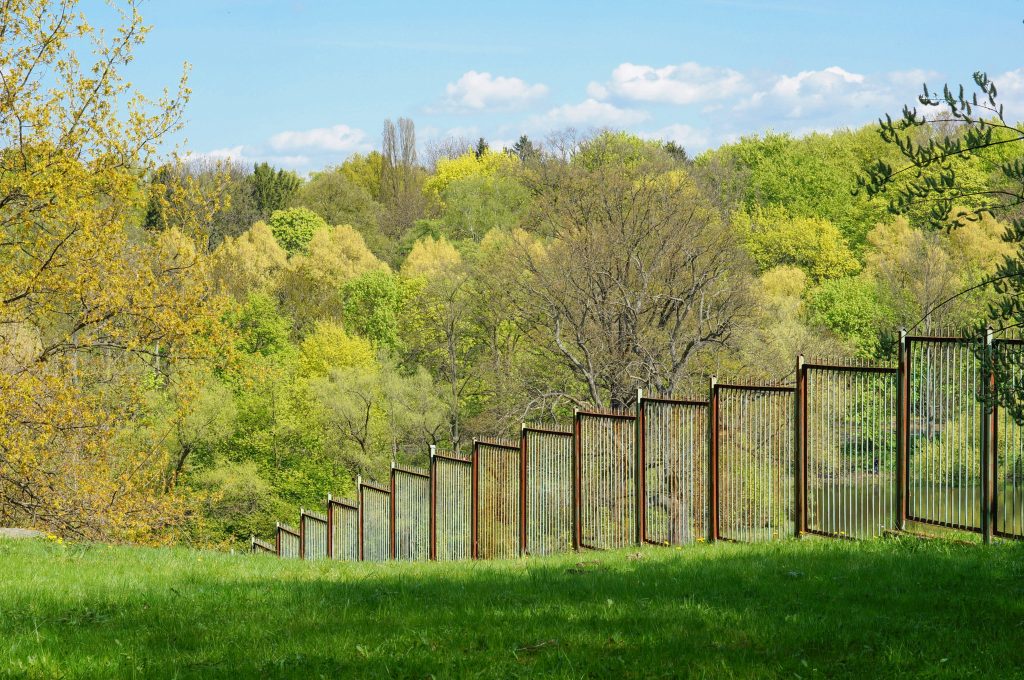
- Regular Inspections: Conduct regular inspections of trees near fences to identify any overhanging or potentially hazardous branches. Inspect for signs of decay, disease, or weak attachment points that could increase the risk of branch failure.
- Pruning: Prune tree branches that overhang or come in close proximity to the fence. Proper pruning techniques include making clean cuts just outside the branch collar to minimize damage and promote healthy wound closure. Remove dead, diseased, or crossing branches to improve tree structure and reduce the risk of branch failure.
- Maintain Clearance: Ensure there is adequate clearance between tree branches and the fence. Trim branches that are too close to the fence to prevent them from rubbing against or damaging the fence structure. The recommended clearance distance may vary depending on the tree species and type of fence.
- Professional Tree Care: For larger or more complex tree pruning near fences, it is advisable to seek the assistance of professional arborists. They have the expertise and equipment necessary to safely and effectively prune trees, especially those in close proximity to structures like fences.
- Selective Tree Planting: When planting new trees near fences, consider the potential size and growth habit of the tree. Choose tree species that are not prone to excessive branch growth or have a spreading canopy that may encroach on the fence. Plant trees at an appropriate distance from the fence to allow for future growth without causing interference or damage.
- Install Tree Guards: For young or vulnerable trees near fences, install tree guards or barriers to protect them from contact with the fence. Tree guards can prevent rubbing, abrasion, or other damage that can occur from branches rubbing against the fence.
- Monitor Tree Health: Regularly monitor the health of trees near fences. Look for signs of stress, disease, or pest infestations that could affect branch stability. Address any tree health issues promptly to minimize the risk of branch failure.
- Consider Tree Removal if Necessary: If a tree near a fence poses a significant risk or is causing extensive damage to the fence, consider the possibility of tree removal. Consult with a professional arborist to assess the situation and determine the best course of action.
Remember, safety should always be the top priority when managing tree branches near fences. If you are unsure or uncomfortable with pruning or managing tree branches
Regular inspections of trees near fences are essential for identifying potential risks, maintaining the health of the trees, and ensuring the safety and integrity of the fence. Here are some key considerations and steps to follow for conducting regular inspections:
- Frequency of Inspections: Schedule inspections at regular intervals throughout the year, focusing on seasons when tree growth and weather conditions may have the greatest impact on branch growth and stability. Aim for at least an annual inspection, but consider more frequent inspections during periods of active growth or after severe weather events.
- Visual Assessment: Conduct a visual assessment of the trees near the fence. Look for signs of decay, disease, or damage, such as cracks, cavities, fungal growth, or dead branches. Observe the overall health and vigor of the tree, including the foliage, bark condition, and any signs of pest infestation.
- Inspect Branch Structure: Examine the branch structure of the tree, paying attention to branches that extend over or near the fence. Look for branches with weak attachment points, crossing or rubbing branches, or branches that appear to be under stress. Assess the size, weight, and proximity of branches to the fence.
- Assess Risk and Potential Hazards: Evaluate the potential risks and hazards associated with the tree’s branches near the fence. Consider factors such as the size of the branches, their proximity to the fence, the condition of the tree and branches, and the potential impact if a branch were to fail or fall. Assess the potential risks to people, property, and the fence itself.
- Pruning Needs: Determine if any pruning is necessary to address potential risks or maintain healthy tree growth. Identify branches that need to be pruned, such as dead, diseased, or crossing branches, as well as branches that pose a risk to the fence. Make note of the pruning requirements and plan for appropriate actions.
- Document Findings: Maintain a record of the inspection findings, including any identified issues, recommended actions, and dates of inspection. This documentation will serve as a reference for future inspections and help track the progress of tree management.
- Professional Arborist Consultation: If you are uncertain about the health or structural stability of the tree or if significant pruning is required, consider consulting with a professional arborist. They have the expertise to assess tree health, determine the best pruning strategies, and provide guidance on managing trees near fences safely and effectively.
- Follow-Up Actions: Based on the inspection findings, take appropriate actions to address any identified issues. This may include pruning branches, implementing structural support measures, or considering the removal of hazardous trees if necessary.
Regular inspections of trees near fences allow for early detection of potential risks and facilitate timely management and maintenance. By prioritizing these inspections, property owners can ensure the safety of their surroundings, preserve the health of the trees, and maintain the integrity of the fence.
Tree Management
There are certain management techniques which are applied to trees and shrubs in agroforestry systems. Some of these techniques are similar to those used in the management of trees in forestry plantations, but others are different. The most important management techniques with regard to the part of the tree which is above ground are:
- Pruning
- Lopping
- Pollarding
- Coppicing
- Thinning.
In addition, root competition can be reduced by certain management techniques applied to tree roots.
Pruning
Removal of branches from the lower part of the tree crown is known as pruning or side pruning. While pruning a tree, branches are always cut near the stem.
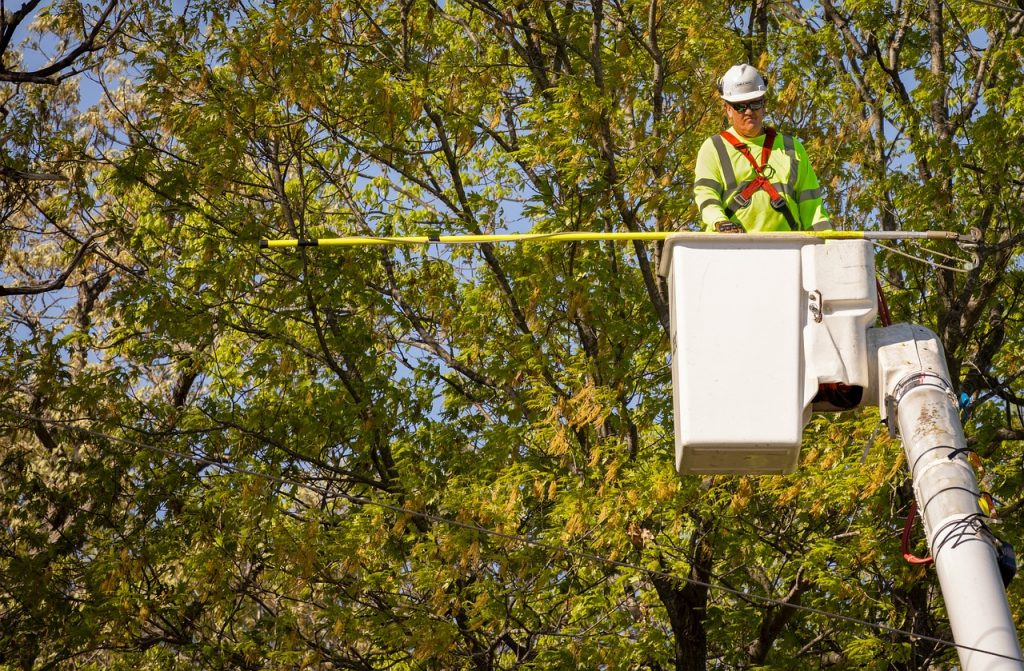
The objectives of pruning in agroforestry are threefold:
- Reduction of shade for crops near the tree
- Improving the quality of the trunk, mainly for timber and poles
- Early harvest of branch wood for fuel or other use.
Too much pruning may reduce the growth of certain species. For young trees, at least four or five layers of the green branches should remain uncut, while older trees of certain species can tolerate more severe pruning.
Pruning should be done at least up to the height the adjacent crops if trees are growing in fields. Such pruning facilitates farming operations and reduces competition. The best time for pruning is towards the end of the dry season when the work will not interfere with growing crops and when the workload in other agriculture tasks is not so heavy.
Lopping
Lopping is distinguished from pruning in that branches are not cut from the base. Also lopping is not always done starting from the lower part of the tree but can be more haphazard. If any selection of branches is made, the main criterion is often a good green leafy biomass since the lopping is usually done to obtain branches for fodder.
Lopping is the most common harvesting technique for tree fodder in many ASAL areas. One of the main advantages with this technique is that it allows harvest without killing the tree. All tree species can be lopped, but the growth rate of certain species can be retarded if they are heavily lopped.
Pollarding
If all the branches and the top part of a tree are cut off this is known as pollarding. There can be several objectives with pollarding:
- Early harvest of wood, fodder or other biomass
- Production of wood or fodder that is out of the reach of livestock, hence there is no need for protection from browsing
- Reduction of shade for crops near by
- Regeneration of the tree crown to promote growth of the trunk for timber or poles.
The choice of pollarding height and frequency depends on the desired products. If the main aim is production of timber or poles, the top of the tree should be cut as high up as possible, and the pollarding interval should be such that the crown is kept as green and vigorous as possible for the maximum production of trunk wood. An interval of 2-5 years is appropriate in such cases.
On the other hand, if the main aim is production of fuel wood or fodder, it is better to pollard lower down the tree to facilitate access. Pollarding can then be done more frequently, e.g. once a year. It is advantageous to try to form a wide “stool” (the part of the tree remaining at the base when it has been cut) in order to achieve a substantial production of biomass.
Sometimes the main aim is to produce staking material, poles or fito for construction. In such situations a wide stool will allow many stems to grow. Initially too dense a stand may sprout after pollarding, and thinning is then recommended, leaving a suitable number of branches in relation to the size of the stems eventually desired.
Not all species can withstand pollarding. Some commonly pollarded species are:
- Balanites spp.
- Bridelia micrantha
- Casuarina spp.
- Cordia abyssinica
- Croton spp.
- Erythrina abyssinica
- Faidherbia (Acacia) albida
- Ficus sycomorus
- Grevillea robusta
- Jacaranda mimosifolia
- Manihot glaziovii
- Markhamia lutea
- Morus alba.
Coppicing
Many species of trees and shrubs have the ability to resprout after the whole tree has been cut. If this ability is utilized for regeneration of the tree the practice is known as coppicing. Coppicing can almost be regarded as a method of tree propagation since it can substitute for the task of planting a new tree after a mature one is felled.
Systematic coppicing is applied as the management technique in alley cropping, and it may be an option for trees on soil-conservation structures. In such a situation coppicing may be done annually, but in other situations, e.g. regeneration of Eucalyptus for pole production, it may be much less frequent. In that case, an interval of 6-8 years may be more suitable.
Not all tree species will coppice after being cut. Some commonly coppiced species are:
- Calliandra calothyrsus
- Cassia siamea
- Cassia spectabilis
- Eucalyptus spp.
- Leucaena leucocephala
- Markhamia lutea.
Certain species coppice well when young but may not do so if cut at maturity. Examples are Casuarina spp., Crevillea robusta, Sesbania sesban and some Albizia spp.
Thinning
Trees established by direct seeding or that have been planted with little space between them will soon start to compete with each other. A dense stand initially promotes straight growth and small branches, but later the trees must be thinned otherwise they will grow too slender and eventually not reach the desired size. Thinning is particularly important for trees grown in woodlots, but applies also to other situations where trees are growing close to each other. Thinning can, for example, be done by removing every second tree or two out of every three trees. Thinning is also a way of obtaining some early harvest.
[geocentric_weather id=”45ff4ccd-3d3f-498e-b0b9-91aaaf766bc4″]
[geocentric_about id=”45ff4ccd-3d3f-498e-b0b9-91aaaf766bc4″]
[geocentric_neighborhoods id=”45ff4ccd-3d3f-498e-b0b9-91aaaf766bc4″]
[geocentric_thingstodo id=”45ff4ccd-3d3f-498e-b0b9-91aaaf766bc4″]
[geocentric_busstops id=”45ff4ccd-3d3f-498e-b0b9-91aaaf766bc4″]
[geocentric_mapembed id=”45ff4ccd-3d3f-498e-b0b9-91aaaf766bc4″]
[geocentric_drivingdirections id=”45ff4ccd-3d3f-498e-b0b9-91aaaf766bc4″]
[geocentric_reviews id=”45ff4ccd-3d3f-498e-b0b9-91aaaf766bc4″]