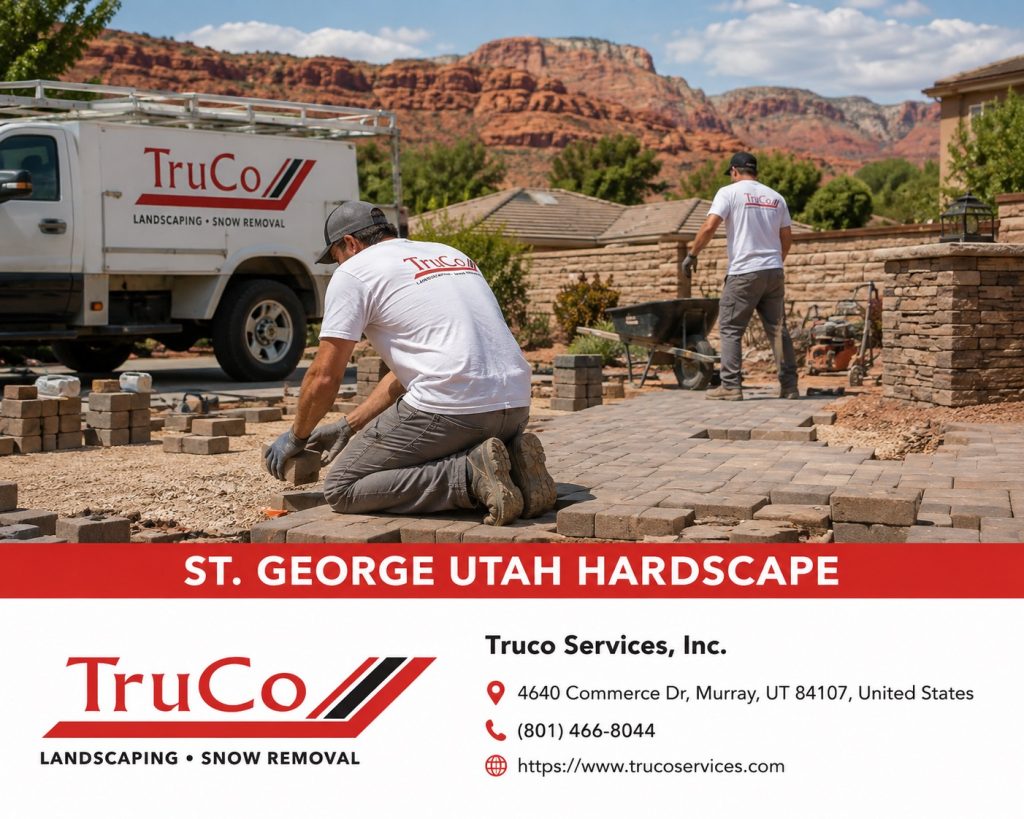
Hardscaping is one of the most effective ways to transform an ordinary yard into a functional, attractive, and enjoyable outdoor environment. For homeowners and businesses searching for St. George Utah hardscape services, the right design and installation can create patios, walkways, retaining walls, outdoor kitchens, fire features, seating areas, driveways, and other permanent landscape elements that complement the property’s architecture and the surrounding Southern Utah landscape.
St. George has a distinctive desert environment, with hot summers, intense sunlight, limited rainfall, and occasional winter freezes. These conditions make professional planning especially important. Hardscape materials need to be selected carefully, while drainage, grading, soil preparation, structural stability, and long-term maintenance all need to be considered before construction begins.
Truco Services provides hardscape guidance and services for St. George-area properties, including patios, walkways, and retaining walls, with an emphasis on appropriate materials, preparation, drainage, and long-term performance.
Hardscape refers to the non-living, constructed elements of a landscape. Unlike grass, trees, flowers, and shrubs, hardscape features provide permanent structure and usable surfaces within an outdoor space.
Common examples include:
A successful hardscape project combines these elements with the living portions of the landscape. The result is an outdoor area that is not only visually appealing but also easier to use and maintain.
St. George Utah Backyard Design
Xeriscape Contractor close to Riverton UT
St. George Utah Garden Landscaping
Hardscaping can be particularly valuable in St. George because homeowners often want outdoor spaces that are attractive without requiring extensive lawn maintenance.
A carefully designed patio can create an outdoor dining area. A walkway can make the property easier and safer to navigate. Retaining walls can help organize changes in elevation. A fire pit area can create a destination for evening gatherings, while decorative stone and pavers can give the landscape a finished appearance.
Hardscape also creates structure. Instead of having a yard consisting primarily of disconnected lawn and planting beds, hardscape features can establish distinct outdoor rooms and define how people move through the property.
Patios are among the most popular hardscape additions for St. George properties.
A well-designed patio can provide space for:
Patios can be constructed using concrete, pavers, natural stone, or other appropriate materials. The best choice depends on the property’s style, budget, expected use, and maintenance requirements.
Pavers offer considerable flexibility in outdoor design. They are available in numerous shapes, sizes, textures, and patterns, making it possible to create anything from a simple contemporary patio to a more traditional courtyard.
Proper base preparation is essential. A beautiful paver pattern can still fail if the foundation underneath it is improperly prepared.
Walkways connect different parts of a property and can dramatically improve both functionality and appearance.
A professionally designed walkway can connect the driveway to the front door, link a patio to a garden, or provide access around the side of a home.
Materials may include concrete, pavers, natural stone, or decorative gravel depending on the desired appearance and application.
Retaining walls can be both practical and attractive. They can help manage changes in elevation, define planting areas, create terraces, and provide additional usable space.
However, retaining walls require careful planning. Drainage, soil pressure, wall height, foundation preparation, and local requirements can all influence construction.
Truco Services’ St. George hardscape guidance specifically emphasizes proper preparation, drainage, appropriate materials, and permits or engineering when required.
St. George’s climate makes outdoor living an appealing component of residential landscape design.
Hardscape can form the foundation of an outdoor living area that includes:
The objective is to create an outdoor environment that feels like an extension of the home.
A fire pit can become the focal point of an outdoor entertaining space. Hardscape materials can be used to create the surrounding seating area, establish a safe circulation zone, and visually integrate the fire feature with the rest of the landscape.
Fire features should always be planned and installed with applicable safety requirements in mind.
For homeowners who frequently entertain, an outdoor kitchen can make a patio significantly more functional.
Hardscape design can accommodate space for:
The kitchen should be incorporated into the overall layout rather than added as an isolated feature.
One of the most important considerations when planning St. George Utah hardscape is the local environment.
Southern Utah experiences strong sunlight and very hot summer conditions. At the same time, winter temperatures can fall below freezing. This means materials and construction techniques need to be selected with temperature changes and long-term durability in mind.
Drainage is another critical consideration. Water should be directed away from structures and managed appropriately throughout the property.
A professional hardscape contractor should consider:
Good design begins below the visible surface.
One of the biggest mistakes homeowners can make is focusing entirely on the visible material while overlooking what is underneath.
Pavers, stone, and other hardscape surfaces depend on a properly prepared foundation. If the underlying base is unstable, improperly compacted, or poorly drained, the finished surface can eventually settle, shift, crack, or become uneven.
For that reason, hardscape installation should not simply be viewed as placing attractive materials on the ground. Excavation, grading, base material, compaction, edge restraint, joint treatment, and drainage all contribute to the finished product.
Truco Services’ St. George hardscape information emphasizes deeper base preparation and crushed gravel considerations for desert conditions, along with drainage planning.
Drainage should be considered before installation begins.
Water that collects against a building, retaining wall, patio, or other structure can create long-term problems. A hardscape contractor should evaluate the property’s existing slope and determine where water should go.
Appropriate grading and drainage can help prevent:
For larger or more complicated projects, professional engineering or permitting may be necessary.
There is no single best material for every St. George property.
Concrete provides a clean, versatile surface and can work well for patios, walkways, driveways, and other applications.
Pavers provide extensive design flexibility. Individual pieces can also make certain future repairs easier because damaged units may be replaced without removing an entire surface.
Natural stone provides a distinctive appearance and can work beautifully with desert-inspired landscape designs.
Brick can provide a traditional appearance and can be incorporated into patios, pathways, borders, and other features.
Gravel can be useful for pathways, seating areas, drainage-conscious landscape zones, and decorative applications. It can also complement larger pavers or stone elements.
Boulders can add natural character and can be especially effective in landscapes designed around the colors and textures of Southern Utah.
The correct material depends on aesthetics, function, durability, maintenance, budget, and installation requirements.
A hardscape design should complement the architecture of the property.
Modern designs typically emphasize:
Desert landscapes can incorporate natural stone, boulders, gravel, drought-tolerant plantings, and warm earth tones.
Contemporary spaces often combine patios, outdoor kitchens, fire features, comfortable seating, and architectural landscaping.
Traditional homes may benefit from brick, curved pathways, structured planting beds, and classic patio designs.
Hiring an experienced professional can provide benefits beyond appearance.
Professional planning helps ensure that individual elements work together rather than looking like separate additions.
A professionally planned layout considers how people will move through and use the space.
Drainage can be incorporated into the design before construction rather than becoming an expensive afterthought.
Proper excavation, base preparation, grading, and material selection can improve the lifespan of a hardscape installation.
Professionals can help coordinate textures, colors, patterns, elevations, planting areas, and architectural features.
A thoughtfully designed outdoor living area can make a property more attractive to current and future owners.
Hardscape pricing varies significantly from one project to another.
The total cost can depend on:
For example, a small walkway is fundamentally different from a large patio with retaining walls, an outdoor kitchen, and integrated drainage.
Rather than relying solely on an online price estimate, homeowners should request a project-specific evaluation and estimate.
A typical professional project may involve several stages.
The contractor discusses the property’s needs, goals, budget, style, and intended use.
The property is assessed for grading, soil, drainage, existing structures, access, utilities, and other considerations.
The layout, materials, dimensions, transitions, and functional zones are planned.
The work area is cleared and excavated as necessary. The appropriate grades are established.
The underlying base is installed and compacted appropriately for the project.
The selected concrete, pavers, stone, brick, or other materials are installed according to the design.
Drainage details, joints, edging, transitions, and other finishing elements are completed.
The completed project is reviewed for appearance, functionality, stability, and overall quality.
A material may look beautiful but may not be appropriate for the property’s intended use or environmental conditions.
Poor drainage can undermine an otherwise attractive installation.
The surface you see is only part of the project. The foundation beneath it is critical.
Furniture, grills, people, and walking space all require room. A patio should be designed around actual use.
Hardscape should complement the landscape rather than overwhelm it. Plants, trees, decorative gravel, and other softscape elements can soften large paved areas.
Irrigation, trees, planting beds, lighting, and future improvements should be considered before construction.
Hardscape generally requires less routine care than a lawn, but it is not maintenance-free.
Depending on the materials used, maintenance may include:
Regular maintenance can help preserve the appearance and performance of the investment.
When you are investing in a permanent outdoor improvement, choosing the right contractor is important. Truco Services, Inc. is a strong choice for homeowners looking for professional hardscape planning and landscaping expertise.
Truco Services specifically provides hardscape guidance for St. George-area projects and discusses patios, walkways, retaining walls, drainage, materials, permits, and engineering considerations as part of its approach.
Hardscape installation requires an understanding of Utah’s environmental conditions. Truco Services works with Utah landscaping projects and provides hardscape-related services across the state.
A successful hardscape project should look good while also serving a practical purpose. Truco Services can help homeowners think about how the outdoor space will actually be used.
The foundation of a hardscape project is just as important as the visible finished surface. Proper preparation, grading, compaction, and drainage should be considered from the beginning.
Hardscape is rarely completely separate from landscaping. A new patio may need planting beds around it. A retaining wall may need irrigation adjustments. A walkway may need landscape lighting.
Working with a company capable of addressing multiple aspects of an outdoor project can make the overall process easier.
Not every property requires the same materials or construction approach. Professional guidance can help homeowners avoid costly decisions and create a design appropriate for their specific property.
The goal should not simply be to make the yard look good immediately after installation. A properly planned project should be designed with durability, maintenance, drainage, and future use in mind.
A hardscape project is a long-term investment. Unlike seasonal plants that can easily be changed, patios, retaining walls, walkways, and outdoor structures are permanent features that can be expensive to replace.
That makes planning particularly important.
Before starting a project, homeowners should consider:
Landscaping includes living elements such as grass, trees, shrubs, and flowers, while hardscaping includes constructed elements such as patios, walkways, retaining walls, pavers, and stone features. The two work best when designed together.
There is no universal answer. Concrete, pavers, natural stone, brick, gravel, and other materials can all be appropriate depending on the project. Climate, use, aesthetics, budget, and installation conditions should all be considered.
Drainage should be considered for virtually every hardscape project. The exact solution depends on the property’s grade, soil, structures, and amount of water that needs to be managed.
Yes. Retaining walls are one of the most common forms of hardscaping. They can provide both structural and aesthetic benefits.
Yes. Replacing portions of lawn with patios, pathways, decorative gravel, or other hardscape features can reduce the amount of turf that needs routine mowing and maintenance.
Hardscape can be integrated with broader landscaping and outdoor improvements. Discussing the entire property with a professional can help ensure that patios, pathways, planting areas, drainage, and other elements work together.
A thoughtfully designed hardscape can completely change the way a property looks and functions. Whether you want a simple walkway, a new patio, a retaining wall, an outdoor entertaining area, or a comprehensive backyard transformation, professional planning can help you achieve a durable and attractive result.
The key is to look beyond the surface. Successful hardscape depends on design, site preparation, drainage, material selection, construction quality, and long-term planning.
If you are searching for St. George Utah hardscape services, consider contacting Truco Services, Inc. to discuss your project. Their St. George hardscape guidance covers important considerations such as patios, walkways, retaining walls, drainage, materials, and project planning.
Truco Services, Inc.
Address: 4640 Commerce Dr, Murray, UT 84107, United States
Contact Number: (801) 466-8044
Website: https://www.trucoservices.com
For a professional approach to St. George Utah hardscape, contact Truco Services, Inc. and discuss how a carefully planned hardscape project can make your outdoor space more functional, attractive, durable, and enjoyable for years to come.